
References:
Service videos:
https://www.youtube.com/watch?v=El2auA9ekqU&t=702s
https://www.youtube.com/watch?v=DUneuOXkIQU
https://www.youtube.com/watch?v=-K7A15fR-nQ&pp=0gcJCfkLAYcqIYzv
From Discord:
Gary says: My guess it’s an 8D. The winding at 6 o’clock would probably been a dashboard clock, Bugatti or similar. The bridge stamps are hand engraved cursive compared to the printed stamp in the drawing. Nice acquisition!

Internet Research
Smith Patterson Company (the retailer on your dial)
Smith Patterson was a Boston jewelry firm, founded in 1885 as "Smith & Patterson" by M.N. Smith and Henry Winthrop Patterson, before becoming Smith Patterson Company from about 1895 through 1956. It began as an agent and importer of sterling and other goods, and eventually became part of the Jordan Marsh department store. Several sources describe it as a fine-quality jeweler comparable to Tiffany in New York, and like Tiffany, it retailed high-end clocks that were actually made by established manufacturers under the Smith Patterson name rather than making them in-house.
That fits the standard "private label" practice of the era: watch and clock makers, including Swiss firms, would mark movements and dials however a paying customer wanted — this was common practice from Sears down to small-town jewelers. So Smith Patterson didn’t manufacture your piece — they had their name put on a movement made by Doxa, then sold it retail in Boston.
Your watch itself
This isn’t an 8-day wall or mantel clock — it’s what collectors call a Doxa "Goliath": an oversized pocket-watch-format movement (much bigger than a normal pocket watch, hence "Goliath") built as an 8-day travel/car clock. These were extremely common in the 1900s–1920s as automobile dashboard clocks, travel clocks in leather cases, or desk clocks, and Doxa was a major producer of this type.
The specific markings you’re seeing are essentially standard for this model:
- "Doxa Watch N.Y." — this shows up verbatim on other examples of the exact same movement, alongside "Switzerland, 15 Fifteen Jewel, 5 Five Adjustments" — so it’s not a misread, it really does say "N.Y.," almost certainly referring to Doxa’s New York import/distribution office for the American market (this is why it ended up branded for a Boston retailer).
- "Brevet 33236" isn’t a serial number — it’s a patent/movement reference marking, with the patent held by Doxa; the standard spec for this movement was 15 jewels with 5 adjustments, exactly matching what’s on your watch. You’ll find "Brevet 33236" stamped identically across dozens of surviving examples — one dated example with this exact marking is placed around 1927, and others are estimated anywhere from the 1900s to 1920s.
So, in short: you have a Doxa-made, Goliath-sized 8-day travel/car clock movement from roughly the 1910s–1920s, cased and dial-branded for retail sale by the Smith Patterson jewelry store in Boston — a fairly well-documented and collectible combination, though not a rare one, since the "Brevet 33236" Doxa movement turns up under many different retailer names.
https://www.starcojewellers.com.au/s-jewelry/smith-patterson-jewelers-boston.html
Smith Patterson Company: the deeper story
Origins and evolution. The firm began in 1885 as Smith & Patterson, founded by M.N. Smith and Henry Winthrop Patterson, operating as agents and importers of sterling and other goods, then reorganized as Smith Patterson Company around 1895 and continued until 1956. They billed themselves as "Diamond Merchants and Jewelers" at 52 Summer Street in downtown Boston.
The building itself is historically notable. The Smith-Patterson store occupied 52-56 Summer Street and 128-130 Arch Street in Boston, and was designed by Peabody and Stearns — one of Boston’s most prestigious architectural firms of the Gilded Age — with drawings dating to 1905–1909 now held in the Boston Public Library’s special collections. So around the time your watch was likely sold, they were operating out of a purpose-built flagship store by a name-brand architect. Photographs of the building survive in the Historic New England archives.
How they operated. This was not a small shop. By the early 1900s, Smith & Patterson had adopted a full department-store-style system, subdividing the business into distinct classifications each with its own buyer and manager, with the fifth floor devoted to watchmakers and jewelry repairers. Trade journals of the era track a genuinely substantial operation: they had a dedicated wholesale department, a sterling silver buyer with an assistant, a named watch department, and even a manager based in Montreal — meaning they had a Canadian sales operation. The Jewelers’ Circular regularly reported their staff comings and goings the way it did for major houses. One fun detail: their head watchmaker, Frank Gendreau, left to start his own firm (Joyce & Gendreau) on Chauncey Street in 1910 after serving as head watchmaker at Smith, Patterson & Co. — and that successor business apparently claims the lineage to this day.
Reputation. In collector circles they’re consistently described as a premier retail jeweler of the type every major city had one or two of — the Boston equivalent of Tiffany in New York, Bigelow & Kennard, J.E. Caldwell, or Tilden & Thurber — retailing the best quality clocks made by renowned makers under the Smith Patterson name. Documented examples of their private-label trade bear this out: it wasn’t just Doxa. There are Smith Patterson-signed pieces with Longines cal. 11.88 trench-watch movements, Swiss 14k gold pocket watches, tall-case tubular-chime clocks, and per Ehrhardt & Meggers’ reference book, they also contracted with the American Watch Co. of Waltham to produce watches under the Smith Patterson name. So they sourced from both the best American and best Swiss makers depending on the product line.
The end. The corporation ran until 1956, and eventually became part of the Jordan Marsh department store — Boston’s dominant retailer, which itself was later absorbed into Macy’s. Massachusetts corporate records show a Smith Patterson Co., Inc. entity filed June 28, 1944 with its principal address at 450 Washington Street — which is notable because 450 Washington was Jordan Marsh’s address, suggesting the Jordan Marsh relationship was already formalized by the mid-1940s, with the name surviving as a store-within-a-store until dissolution.
The Doxa side: your movement’s story
Your watch is a direct product of one of the more interesting episodes in early 20th-century Swiss watchmaking. Doxa was founded in 1889 in Le Locle by Georges Ducommun, who had begun a watchmaking apprenticeship at age 12 and struck out on his own at 21, taking the name from the Greek word for "glory." He built his early reputation on robust, precise watches — honored at the Liège World’s Fair in 1905, with his anti-magnetic Doxa winning the gold medal at the Milan World’s Fair in 1906.
The 8-day movement in your watch is the invention that made the company. In 1907 Doxa debuted a dashboard-mounted clock with an 8-day power reserve — the first of its kind — quickly adopted by Bugatti for its high-end automobiles, with the "8-Day Doxa Caliber" patented in 1908. That patent is your "Brevet" marking — brevet is simply French for patent. The movement was a genuine engineering success: the company was renamed Doxa Watch Factory, Georges Ducommun in December 1909 following the 8-day movement’s introduction, and the movement later proved its value on the wrists of German soldiers in World War I. By 1915, the company employed several hundred watchmakers, designers and engineers.
The same caliber was cased every which way — car dashboard clocks, travel clocks in leather cases, desk pieces, and Goliath "pocket watch" formats like yours — and, exactly like the American private-label trade, Doxa would sign the dial for whichever retailer ordered them. The "Doxa Watch N.Y." stamp reflects their American import office (Swiss makers needed a US distribution arm to clear customs and serve the trade), which is how a Le Locle movement ended up wearing a Boston jeweler’s name.
One nice historical footnote connecting to your own bench interests: Ducommun’s success let him buy the Château des Monts in Le Locle — today home to the world-renowned horological museum there — and after his death in 1936, the company passed to Jacques Nardin, grandson of Ulysse Nardin, before its later, better-known second life as a dive watch maker.
Dating your piece: the combination of the 1908 patent, the "N.Y." import marking, Smith Patterson retail branding, and the 15-jewel/5-adjustment grade puts your watch most plausibly between about 1910 and the mid-1920s. If you post the serial number from the movement, there are some rough Doxa serial ranges floating around the NAWCC boards that could narrow it further — the surviving examples with serials in the 1.3-million range have been dated to the mid-1920s.
A deeper investigation could dig through digitized Jewelers’ Circular archives, Boston city directories, and Swiss patent records to build a fuller chronology of Smith Patterson’s watch department and pin down the Brevet 33236 patent’s actual filing details.
Smith, Patterson Co. — some info from the 925-1000 forum thread
The partnership era (1885–1895). The trade press paints a picture of an already-established firm by the early 1890s. In 1891, F.H. Elliott of Smith & Patterson sailed for Europe with his wife on a vacation tour; A.A. Abbott was serving as the firm’s Montreal agent; the company fielded a baseball nine in the jewelry trade tournament (losing to Thomas Long & Co. that June); and M.L. Carter, a valued salesman of five years, left the house for Hayden W. Wheeler & Co. of New York. So by 1891 they already had a European buying presence, a Canadian agency, a sales force, and enough staff for a company ball team.
Incorporation and the department system (c. 1895–1903). After reorganizing as a corporation, the firm modernized aggressively. They adopted the department system, subdividing the establishment into distinct classifications with a responsible head over each as buyer and manager — with the fifth floor devoted to the watchmakers and jewelry repairers. A merchandising note from the same era mentions tables decorated with novelties standing in the aisles between the regular counters and showcases, placed to great advantage — early "impulse display" retailing.
Crime files. The thread preserves a small saga from around 1903: Chief Watts of the Bureau of Criminal Investigation sought a warrant for Arthur S. Black, Jr., a clerk of about a year’s standing at the 52 Summer Street store, alleged to have stolen from it; the chief recovered fifteen watches, two diamond rings and several stickpins from Black’s valise at the Broadway Central Hotel in New York. The sequel: Black, charged with stealing about $1,000 worth of jewelry, later surrendered himself to Boston police, having been "South most of the time" since leaving New York. Note that detail — fifteen watches walked out the door with one clerk, which tells you the depth of watch stock they carried at retail.
People and personalities (1908–1917). The thread’s richest vein is personnel notices, which collectively map the company’s structure:
- Henry Reynolds, of the watch department, went to Chelmsford, Mass. for a brief fishing outing in 1908, while F.A. Mansfield, the company’s Montreal manager, visited Boston the same week. A named, staffed watch department — the department that would have handled your Doxa.
- Carl D. Smith sailed from New York on the Kaiserin Augusta Victoria in March 1910 for a two-month tour of the principal jewelry centers of the Continent. These European buying trips are precisely the channel through which Swiss goods like Doxa 8-day clocks entered their inventory. Smith served as secretary of the corporation from its formation and manager of the wholesale department, having previously been a partner; he died of pneumonia in March (year per the thread) at age 69 at the Hotel Sheraton, a native of Virginia, member of the Algonquin Club and active in the Second Unitarian Church.
- Mr. Patterson himself bought a summer house at Marblehead Neck on part of the former McQuesten estate in 1914.
- F.H. Elliott won first prize from the National Wholesale Jewelers’ Association in 1915 for the best essay on "The Value of the Wholesaler of Jewelry as a Distributor," published in The Manufacturing Jeweler.
- The most colorful item in the whole thread: in November 1917, vice president Nelson H. Smith — studying aviation in preparation for war service — piloted his own Burgess-Dunne hydro-airplane from the Mystery Island air station, circled 4,500 feet above Boston Common six times, and dropped 2,000 Liberty Loan pamphlets over the city, snapping photos despite the bitter cold, the whole flight taking 58 minutes. He reported he could see people on the rooftops of the jewelry district but couldn’t distinguish individuals. The Jewelers’ Circular headlined him "Jeweler-Aviator."
The 1920s: peak retail, corporate culture. The Maximus Club — a social club composed of Smith, Patterson Co. employees — held its annual banquet at the Boston City Club in November 1924 with a large attendance, electing W.R. Tuttle president and Joseph Manning secretary-treasurer, admitting five new members, and adjourning to the theatre. Assorted notices track employees buying homes in Malden, surviving car wrecks on the way back from the Cape, and so on — the texture of a big, stable employer.
1930: the wholesale division dies. This is the thread’s key structural turning point. In January 1930 — note the timing, immediately after the Crash — the wholesale department of Smith Patterson Co. went into dissolution. Four veteran members (C.H. Ramsdell, A.V. Johnston, Alfred F. Reed and Clarence L. Quimby) incorporated the United Jewelry Co. at 387 Washington St. with $50,000 capital, confining themselves strictly to wholesale, with Johnston and Reed covering all of New England on the road; Howard A. Martin, the wholesale manager of many years, was negotiating to form another group. Two more veteran road men, Harry E. Pitcher and Frank Silva, joined the Albert Walker Co. of Providence following the relinquishment of the wholesale department — Pitcher covering Vermont, New Hampshire and territory north of Manchester from Bellows Falls, Silva covering Maine and southeast New Hampshire. After 1930, Smith Patterson was retail-only.
Wartime and the final years (1943–1958). A December 1943 item shows them still marketing energetically mid-war: the store displayed a window poster reading that a personal survey proved servicemen were keen for jewelry gifts — favorites being diamond rings, lockets, bracelets, earrings, and ankle chains, in that order. An image of the Smith Patterson & Co. window display was published in 1955. A November 1954 column still reports routine staff news — controller William J. O’Brien’s marriage, a shipping-department veteran moving to the Post Office, the head of the marking department returning from vacation — so the store was a going concern with a full staff right up to the end. The last dated item I could retrieve: a September 1958 note that Howard A. Martin, formerly of the wholesale department and later in business for himself in the Washington Building, had retired to Falmouth. That’s an epilogue — the company itself had wound down by then, consistent with the 1956 end date and absorption into Jordan Marsh.
What this adds to your watch’s story
A few things sharpen up nicely. First, your Doxa was sold through a store with a dedicated, professionally staffed watch department whose buyers made regular European purchasing trips — it entered Boston through exactly the pipeline the trade journals describe. Second, the 1930 wholesale dissolution gives you a soft dating boundary from the retail side: the firm’s expansive era, when it was stocking imported specialty goods like Swiss 8-day Goliaths in quantity, was essentially 1895–1929, which brackets neatly with the Doxa movement’s 1908 patent and production peak. And third, the recovered-loot list from the 1903 Black theft and the fifteen-watches detail confirm watches were a core, high-volume category for them — your piece wasn’t an oddity in their case, it was inventory.
One thing the retrieved pages don’t contain is anything watch-specific beyond those items — the thread (it’s a silver-marks forum, after all) leans heavily toward silver trade news. If pages 4–8 have material you’d like folded in — I’d particularly expect trademark/hallmark registrations, more advertisements, and possibly the closing announcement — paste the text and I’ll merge it into this chronology.
That number is useful, but I want to be upfront about what it can and can’t tell you.
What it is: 609797 is the individual movement serial number. On these Goliaths, Doxa stamped the serial on the balance cock (and often repeated it under the dial or on the case). It’s distinct from the Brevet 33236, which — as we established — is the 1907 patent number common to every example of this caliber.
The bad news for precise dating: there is no surviving factory record to match it against. Doxa’s pre-1940 archives were destroyed by a flood in 1966, so unlike your Walthams and Elgins, there’s no serial-number lookup table for early Doxa production. The dating scheme collectors do use for Doxa — where the first two digits of the serial encode the year — applies only to case backs on watches made between 1940 and 1965, not to movement serials and not to anything from your watch’s era. So nobody can hand you a "609797 = 1914" answer with real authority, and anyone who does is guessing.
What we can do is bracket it comparatively. Production of this caliber started after the 1907 patent, and surviving examples give some anchor points: the movement serials observed on these 8-day Goliaths run from the low hundreds of thousands up past 1.3 million, and the example I found earlier with a serial in the 1.3-million range carried a period dating of around 1927. Your 609797 sits well below that — under half the 1927-era serial — which, assuming roughly steady production (a real assumption, since output would have dipped during WWI and surged after), points toward the early-to-mid 1910s, and I’d comfortably say pre-1920. That also squares nicely with everything else about the watch: Smith Patterson’s watch department was at full strength making European buying trips in exactly that window, and the "Doxa Watch N.Y." import marking fits the pre-WWI/teens American distribution push.
If you want to tighten it further, the best available method is crowdsourcing: the NAWCC forums have accumulated a scattering of dated Doxa 8-day examples (presentation engravings, original sale receipts, dated automobile installations), and posting your serial with photos there sometimes shakes loose a comparable with a firm date. The other physical clue worth checking while you have it open: any Swiss hallmarks or case-maker stamps inside the caseback, and whether the case has an import mark — British import hallmarks in particular carry date letters that can nail the year the case cleared customs, which would give you a hard "no later than" date. Given your bench setup, you’re better equipped than most to get clean macro shots of those marks under the stereo scope.
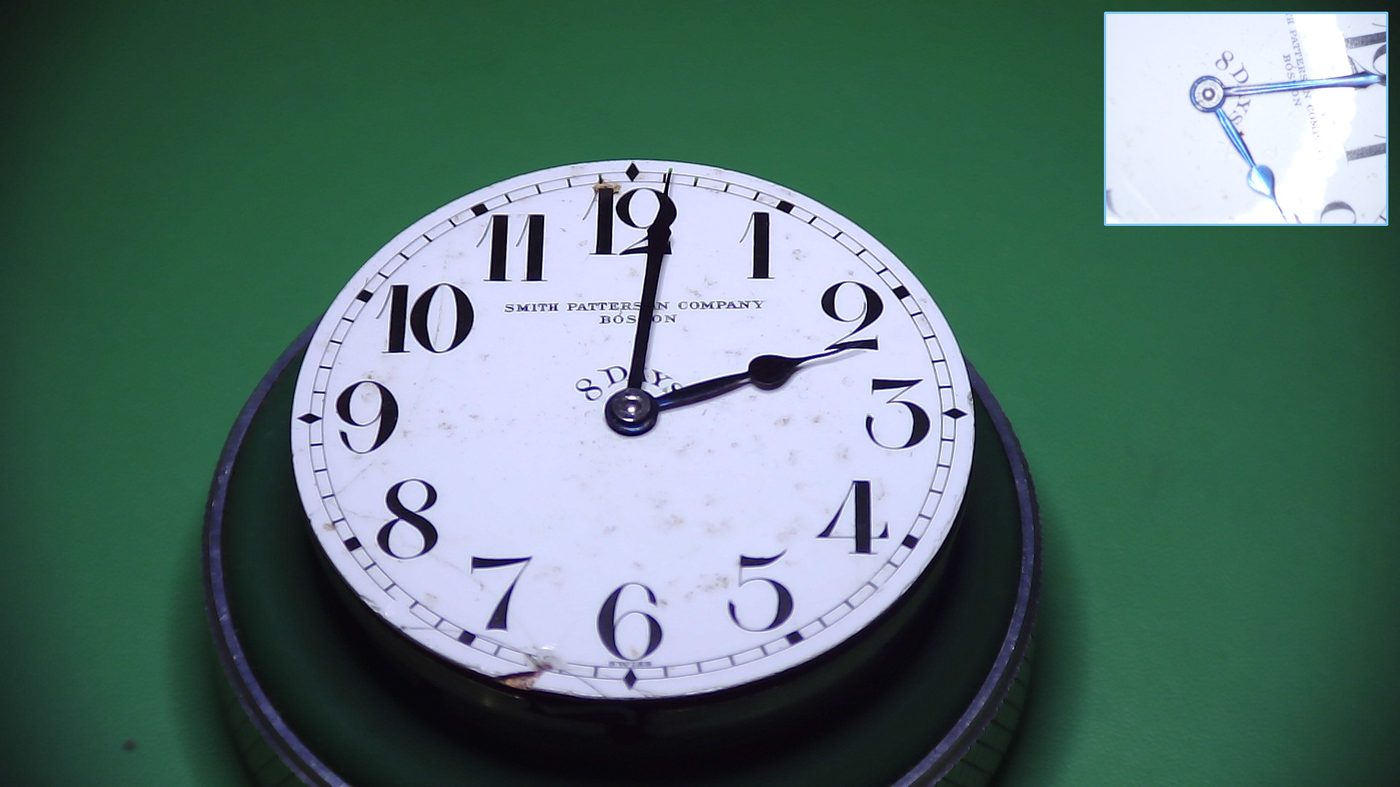
Smith Patterson / Doxa 8-Day Goliath
Boston retailer, Le Locle movement, circa 1910–1918
The Watch
An oversized (roughly 65–70 mm) 8-day movement in pocket-watch format (plates, jeweled train, escapement, etc.)
Known to collectors as a Doxa "Goliath." Doxa cased the same caliber to be used as car dashboard clocks, leather-cased travel clocks, desk clocks and giant "pocket watches."
The dial is signed Smith Patterson Company, Boston; the movement is Doxa’s, stamped "Doxa Watch N.Y., Switzerland, 15 Jewels, 5 Adjustments, Brevet 33236," with serial 609797 on the balance cock.
The signature is a standard private-label arrangement: the retailer’s name on the dial, the maker’s movement underneath.
It is not known how this specific watch was used, but having been sold at a jeweler I would guess it was originally in a leather travel case OR it was sold to be installed in a car.
It was given to me by a kind soul at the 2026 Mid Winter Regional NAWCC mart in St. Augustine, FL (an event I suggest anyone interested in horology check out) (btw, NAWCC membership is a good value for those active in the horology collection or repair areas) because I was at the time wanting to learn to work on platform escapements. The person found me later on the mart floor and handed me this watch, insisting I have it for free to learn on. It was a kind deed, but in my shock I neglected to get the person’s name or take a photo with them. In a very Cinderella kind of way, my intent is to repair the watch and bring it to the 2027 event in the hopes of finding the person and showing them their act of faith paid off.
Decoding the Markings
|
Marking |
Meaning |
|
Brevet 33236 |
Not a serial number. Swiss Patent No. 33236, granted in 1907 to Georges Ducommun of Le Locle for a movement with an unusually long running time. Every example of this caliber carries it. |
|
Doxa Watch N.Y. |
Genuine, not a misread. Reflects Doxa’s New York import office, the channel that carried a Le Locle movement to a Boston jeweler. |
|
Serial 609797 |
The individual movement number (see below). |
Dating the serial
The serial cannot be looked up. Doxa’s pre-1940 archives were destroyed in a flood in 1966, and the collector scheme where the first two digits encode the year applies only to case backs of 1940–1965.
The only method left is bracketing. Observed serials on this caliber run from the low hundreds of thousands past 1.3 million, with a 1.3-million example dated to about 1927. At 609797, this watch sits well below that, pointing to the early-to-mid 1910s. This is an estimate, not a documented date.
The Maker: Doxa
Georges Ducommun founded Doxa in Le Locle in 1889. The 8-day caliber of 1907 made its name, becoming standard equipment on Bugatti’s cars and later appearing on ship and aircraft instrument panels. On Ducommun’s death in 1936 the firm passed to his son-in-law Jacques Nardin, grandson of Ulysse Nardin, long before Doxa’s second life as a dive-watch maker.
The Retailer: Smith Patterson Company
Boston’s answer to Tiffany. Most sources give an 1885 founding by Marcell N. Smith and Henry Winthrop Patterson, but the firm’s own shield trademark claimed use "since 1876," and its 1950 and 1955 anniversary celebrations also count from 1876. The conflict is unresolved; the likely explanation is a predecessor business in 1876 and the partnership proper in 1885. It became Smith, Patterson & Co. in 1895 when Carl D. Smith, the senior partner’s brother, joined, and was later incorporated.
- The store: 52 Summer Street at Arch, rebuilt around 1905–06 into a flagship (Peabody & Stearns drawings, 1905–1909, are in the Boston Public Library). The fifth floor housed the firm’s own watchmakers and repairers. The firm left Summer Street for Washington Street in 1947–48.
- Early department-store thinking: by 1893 the business was split into managed departments, with watches and clocks already separate. Henry L. Reynolds ran the watch department in the 1908–1913 era, the period this watch most likely passed through.
- The pipeline: Carl Smith made two-month buying tours of Continental Europe (1910), with regular diamond and silver buying trips elsewhere. A Montreal branch gave the firm a Canadian operation. Private-label work was routine across categories, from Gorham and Towle sterling to tall-case clocks, Longines trench-watch movements and, per Ehrhardt and Meggers, contract Waltham watches.
- Watches were core stock: in 1897–98 a single clerk, Arthur S. Black Jr., left with fifteen watches, two diamond rings and several stickpins in his valise, and was caught after trailing Spanish-American War soldiers from camp to camp.
Three Episodes Worth Knowing
- The Titanic: in April 1912 the trade press reported that Carl D. Smith had booked passage on the Titanic three weeks ahead and meant to come home on her, but changed plans two days before sailing to reach Boston before Easter.
- The jeweler-aviator: in November 1917 vice-president Nelson H. Smith, training for wartime flying, piloted his own Burgess-Dunne hydro-airplane 4,500 feet over Boston Common, circling six times and dropping 2,000 Liberty Loan pamphlets in a 58-minute flight.
- The wholesale exit: on 23 November 1929, weeks after the Crash, the firm announced it would retire from wholesale jewelry on 1 January 1930 after some fifty years, keeping manufacturing and retail. By 1956 the store was the Smith-Patterson division of Jordan Marsh, whose name ended up on Macy’s in 1996.
Dating This Watch
Movement serial (early-to-mid 1910s), the New York import marking, and the dial signature of a firm at the height of its 52 Summer Street era all agree on circa 1910–1918, sold in Boston before the firm’s expansive pre-1930 period ended.
Next Steps
- Post serial 609797 with photos to the NAWCC forums for dated comparables.
- Photograph case hallmarks and import marks. A British import mark carries a date letter, giving a hard "no later than" date.
- Check under the dial for a repeated serial and service scratchings.
References
- "Information Regarding Smith, Patterson Co. of Boston, Massachusetts," 925-1000.com forum thread (extracts from The Jewelers’ Circular, The Keystone and Jewelers’ Circular-Keystone, 1891–1958)
- NAWCC Message Board, "Swiss made pocket watch need help identifying" (Brevet 33236)
- NAWCC Message Board, "Need Help Identifying Doxa 8 Tage pocketwatch"
- Doxa Watches, "History"
- WatchUSeek, "A Brief Guide to Vintage Doxa"
- WahaWatches, "How to Date a Watch in 16 Steps"
- Sammler-Uhren, "Doxa: Information on age and works"
- Lawrence History Center, catalog record 1987.071.002 (Smith Patterson Co. trophy, 1915)
- Ruby Lane, Smith Patterson & Co. mahogany tall clock listing
- Peabody and Stearns Collection, Boston Public Library Special Collections
- Ehrhardt, Roy, and Meggers, William. American pocket watch identification and price guide series.
- Wikipedia, "Jordan Marsh"
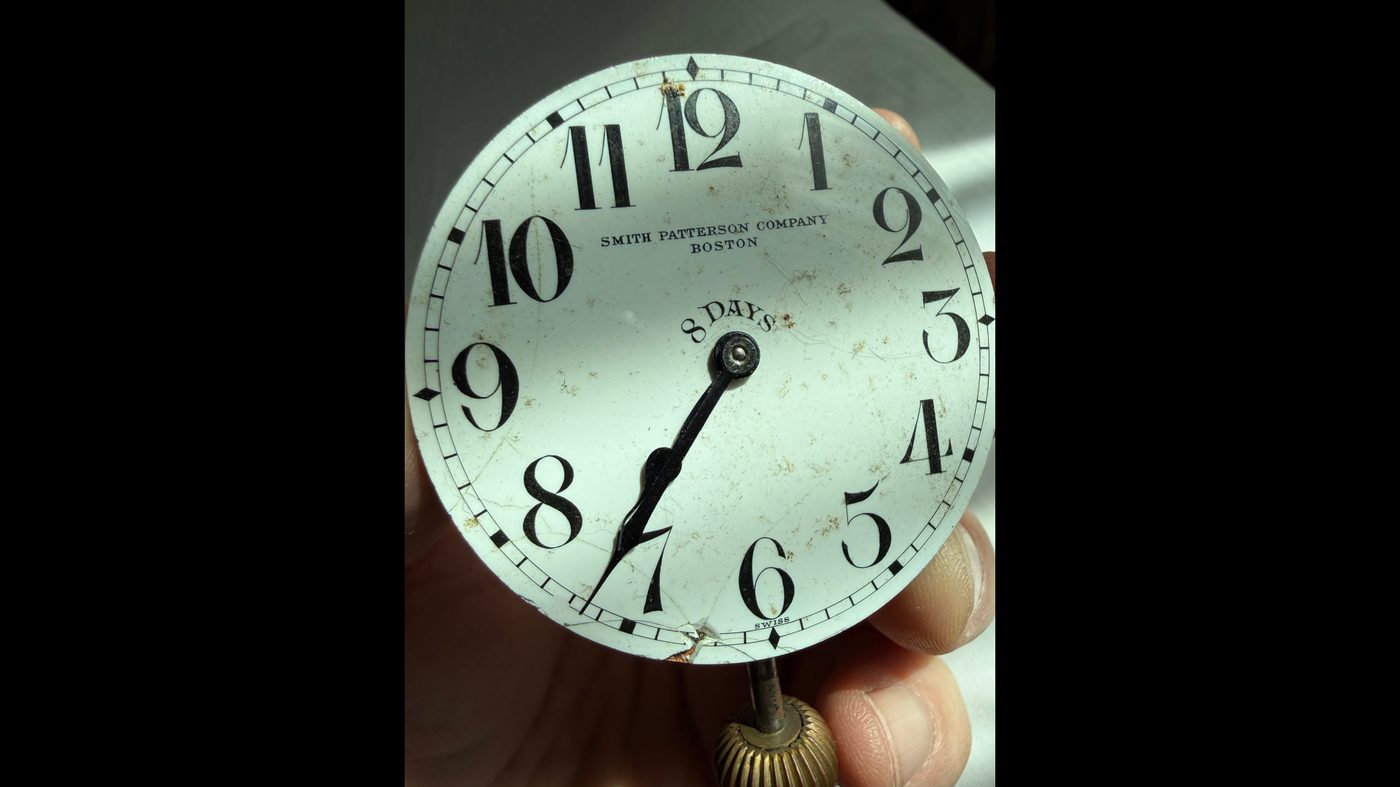
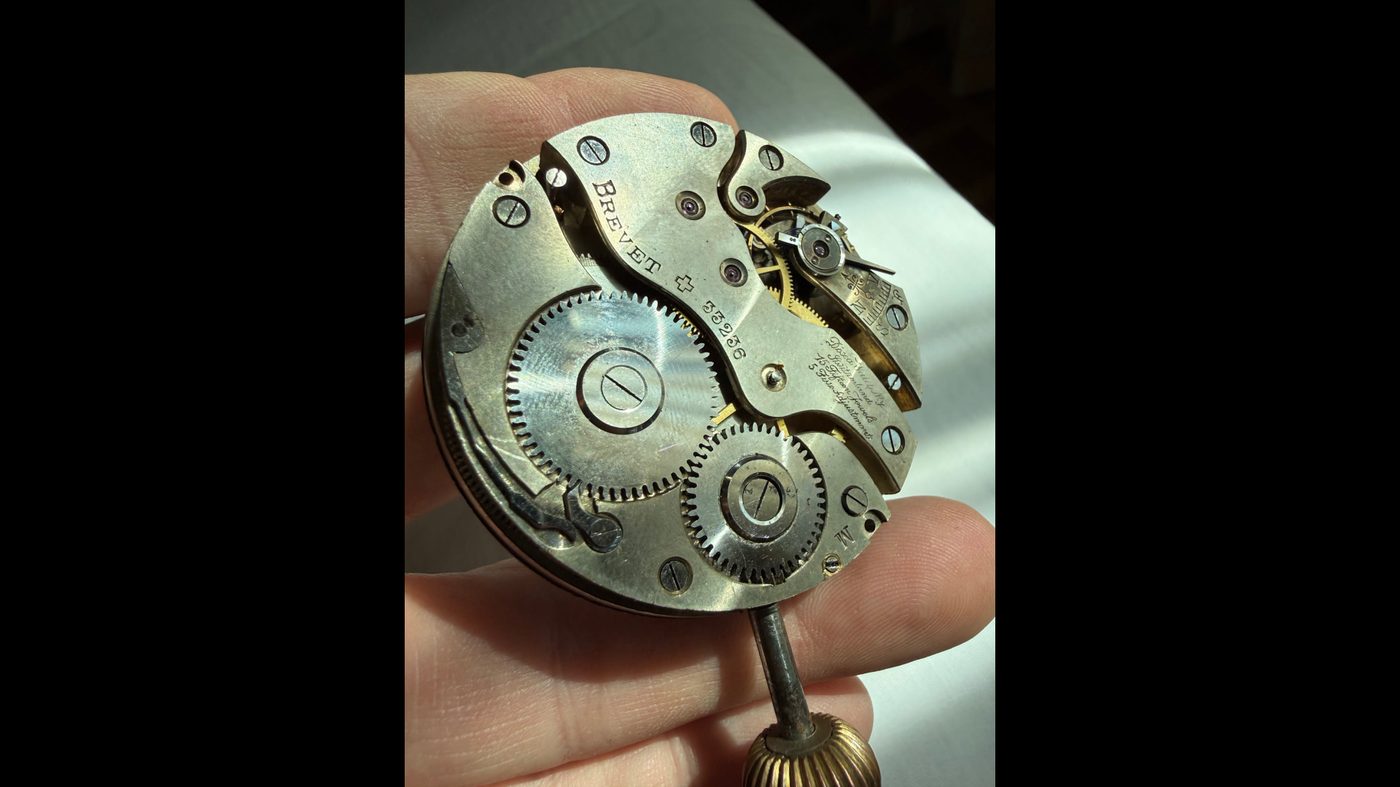
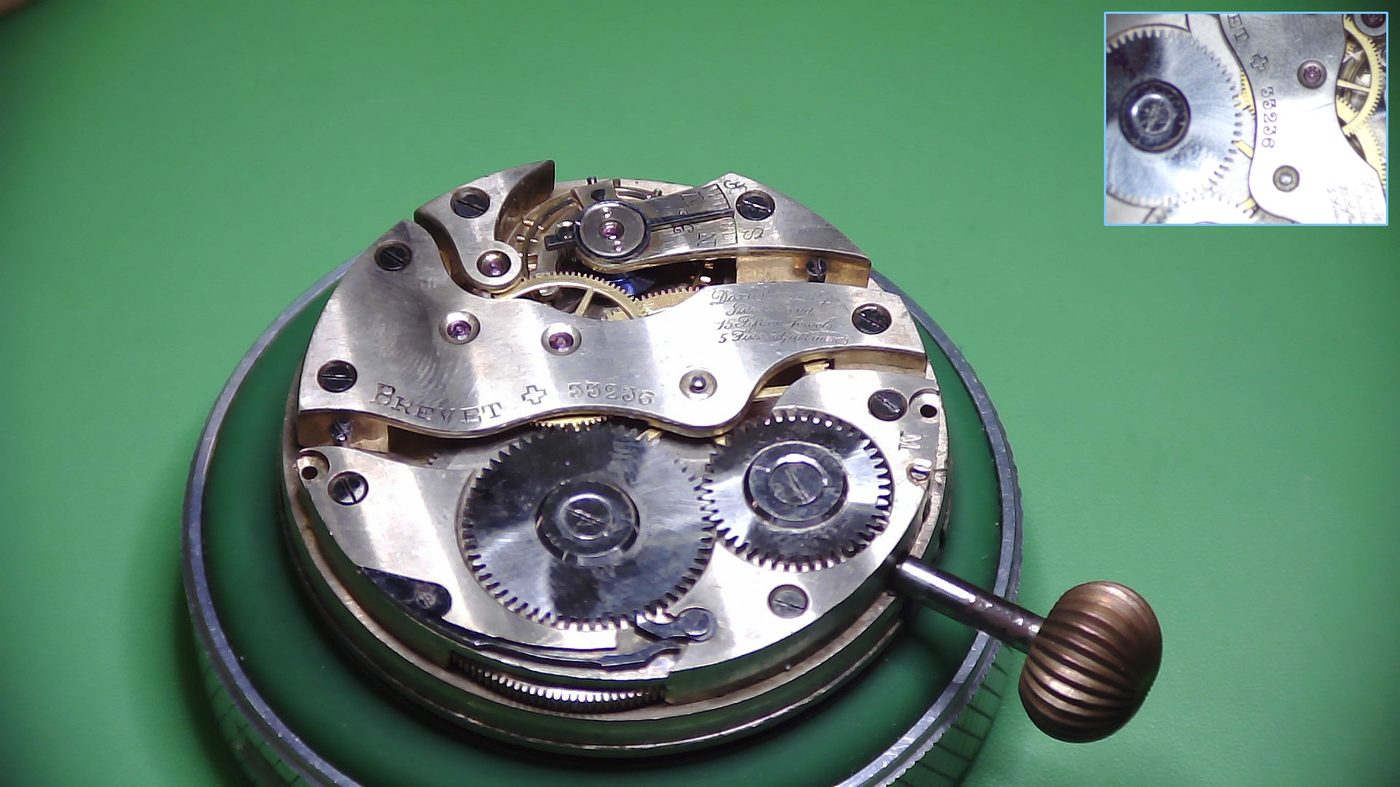
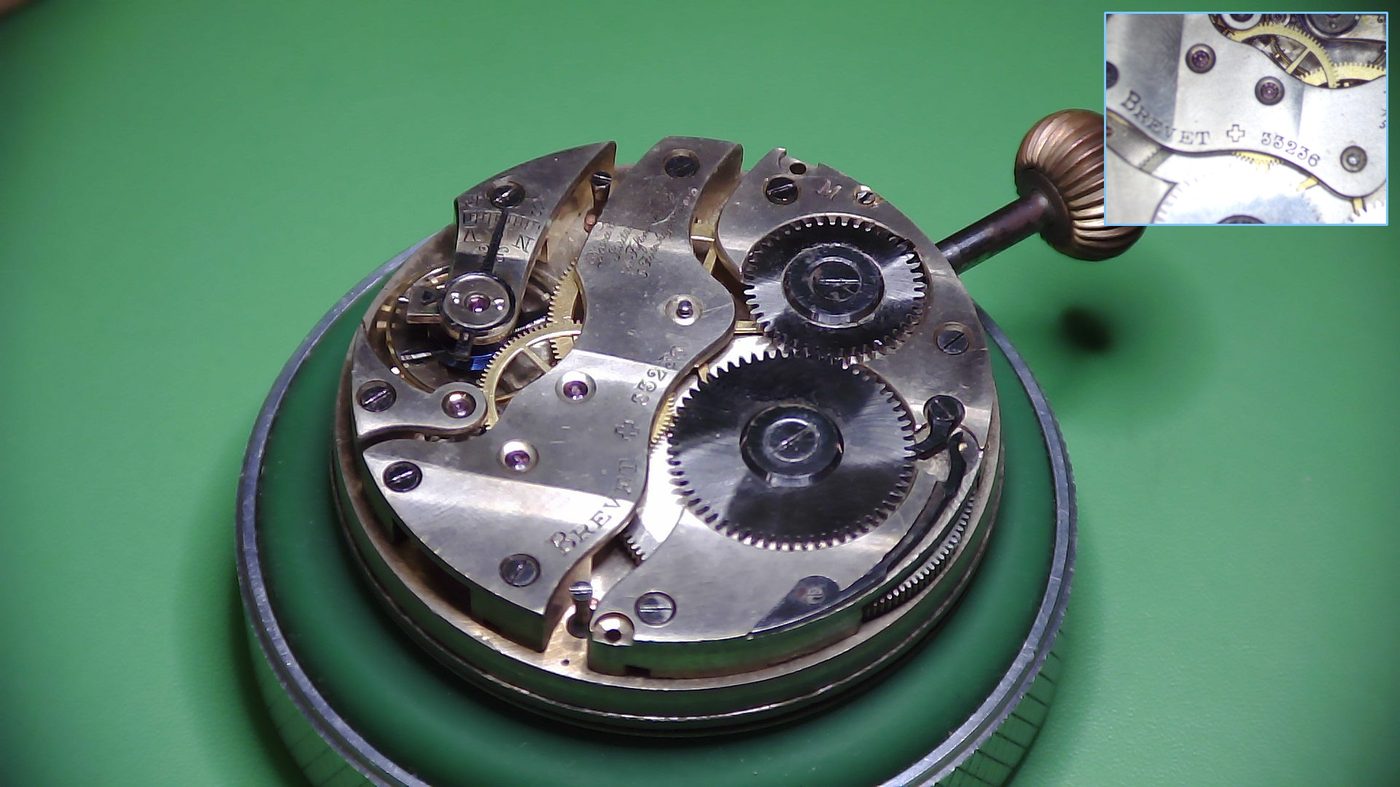
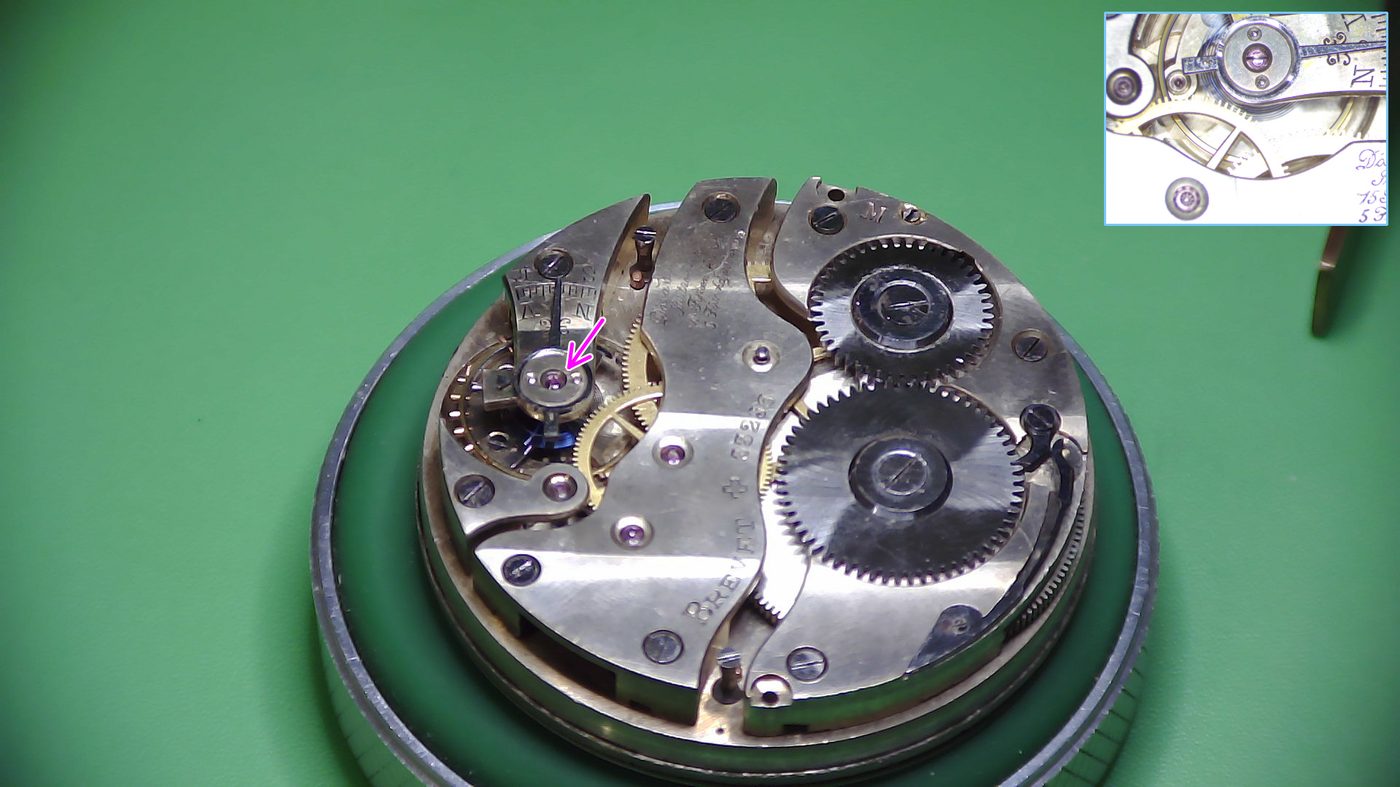
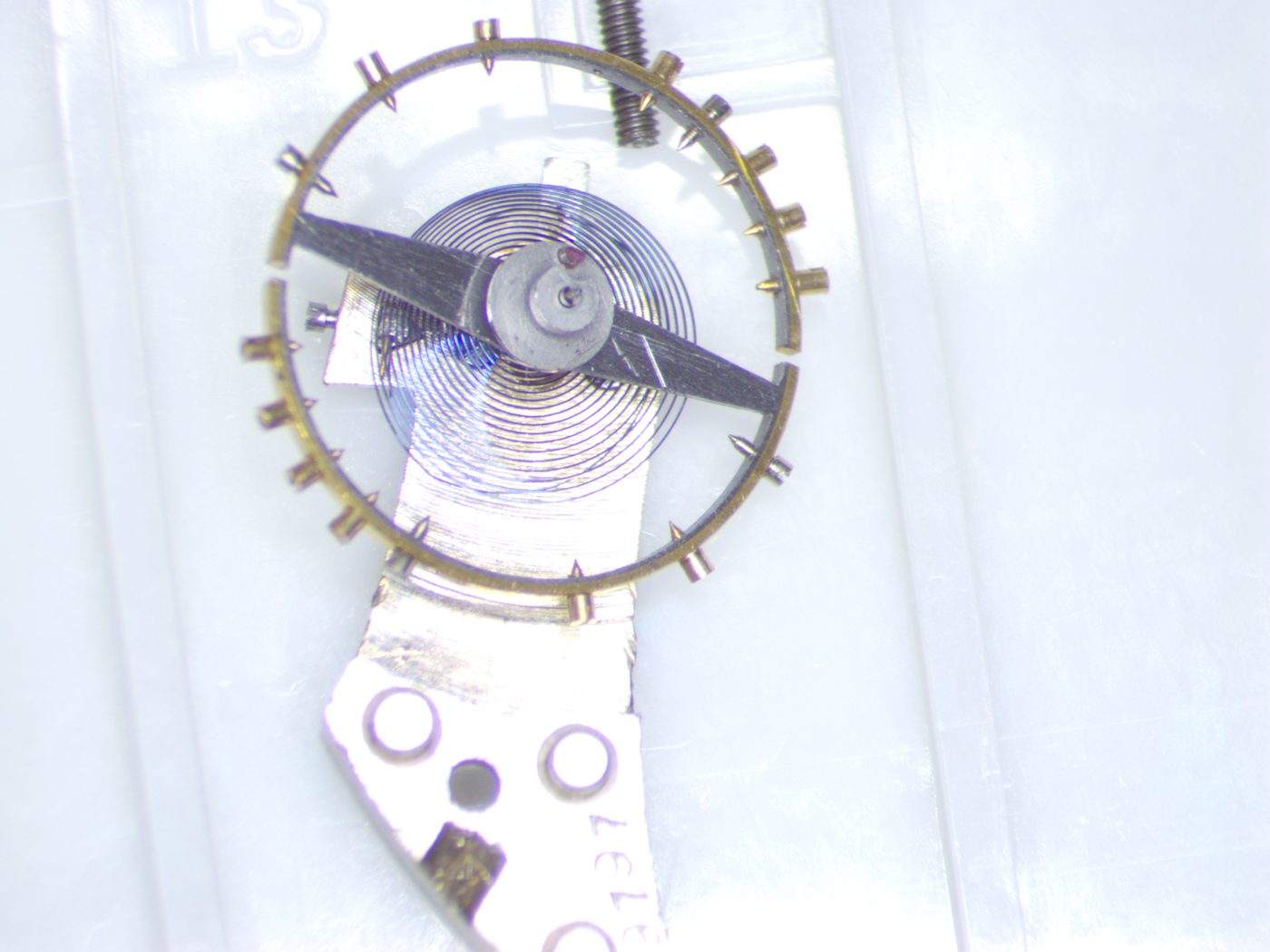
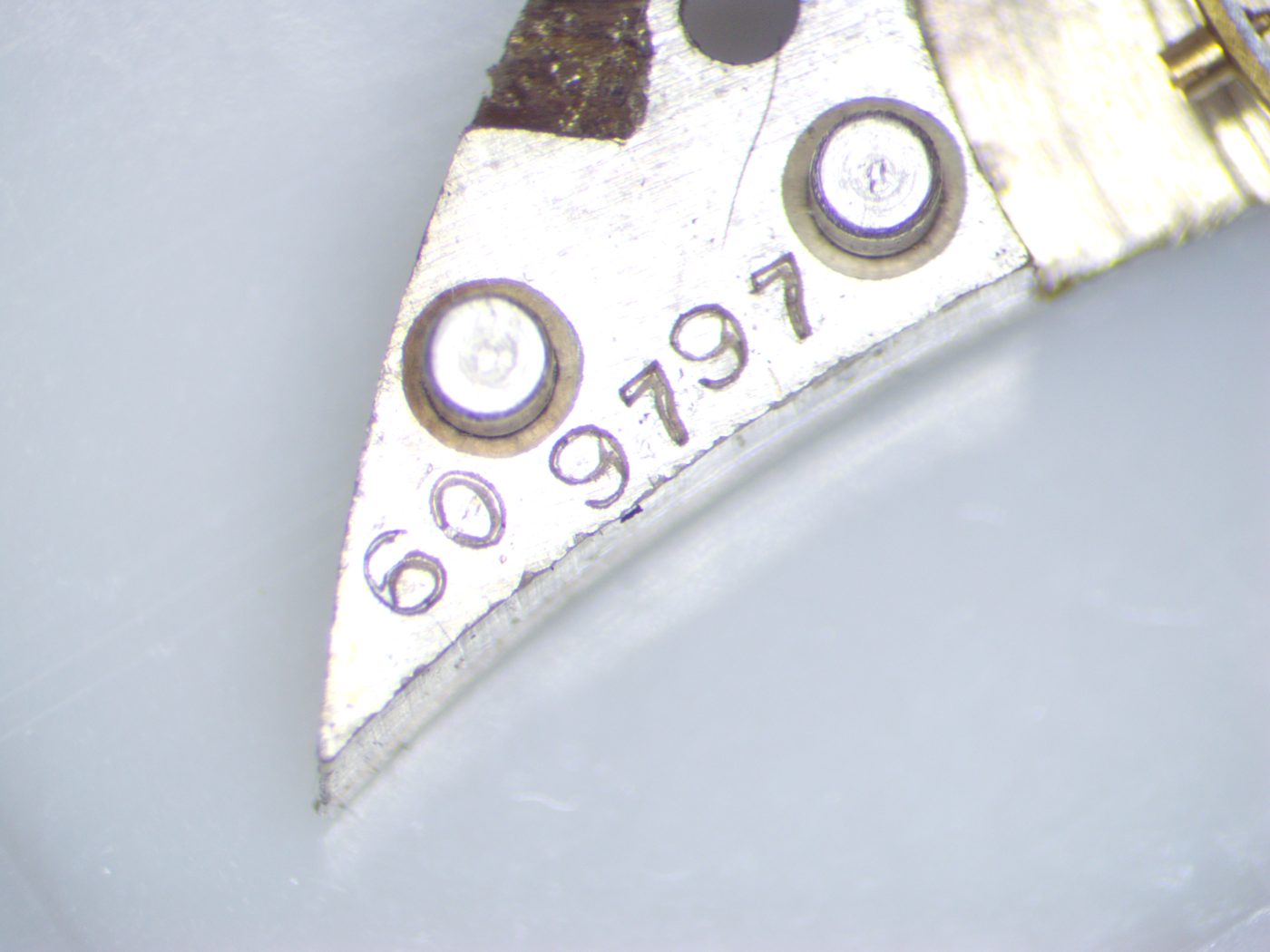
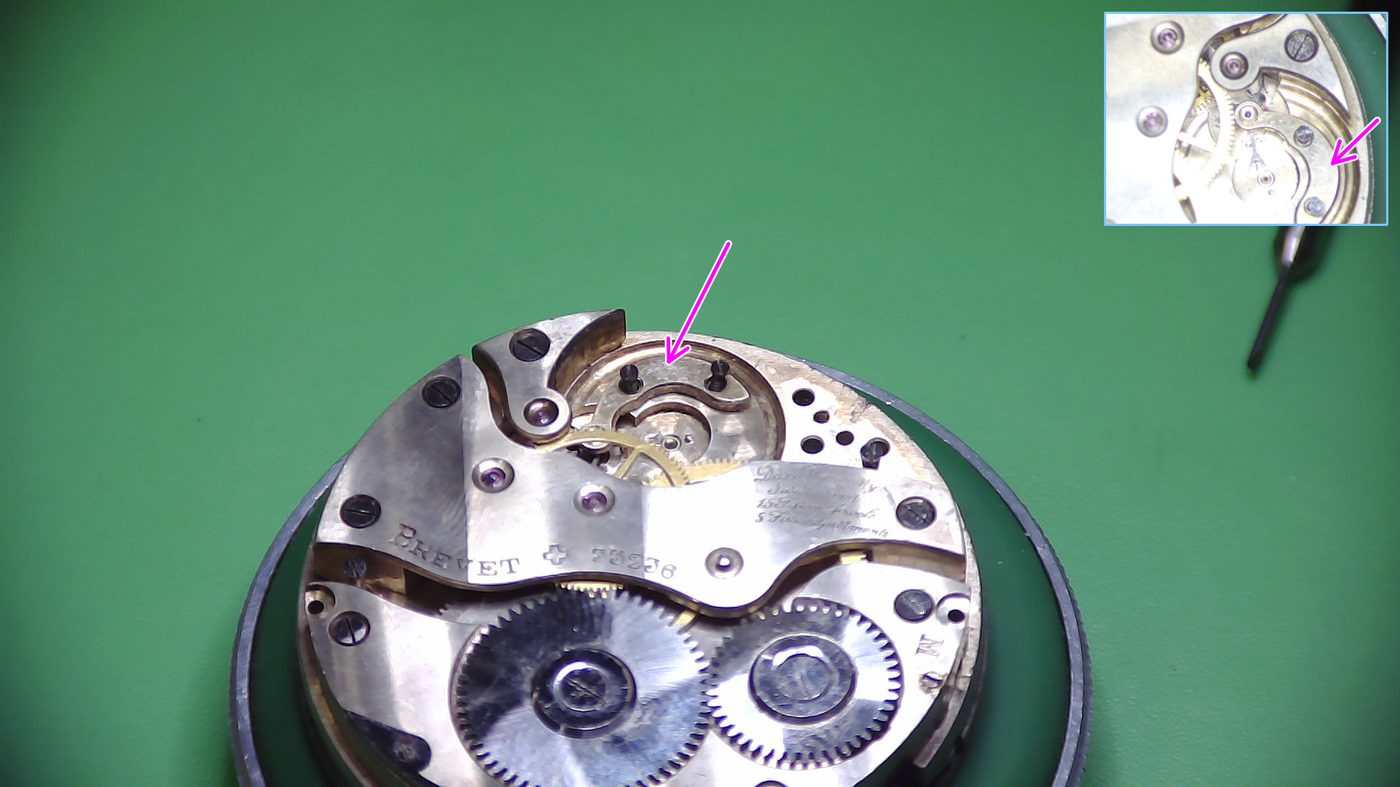
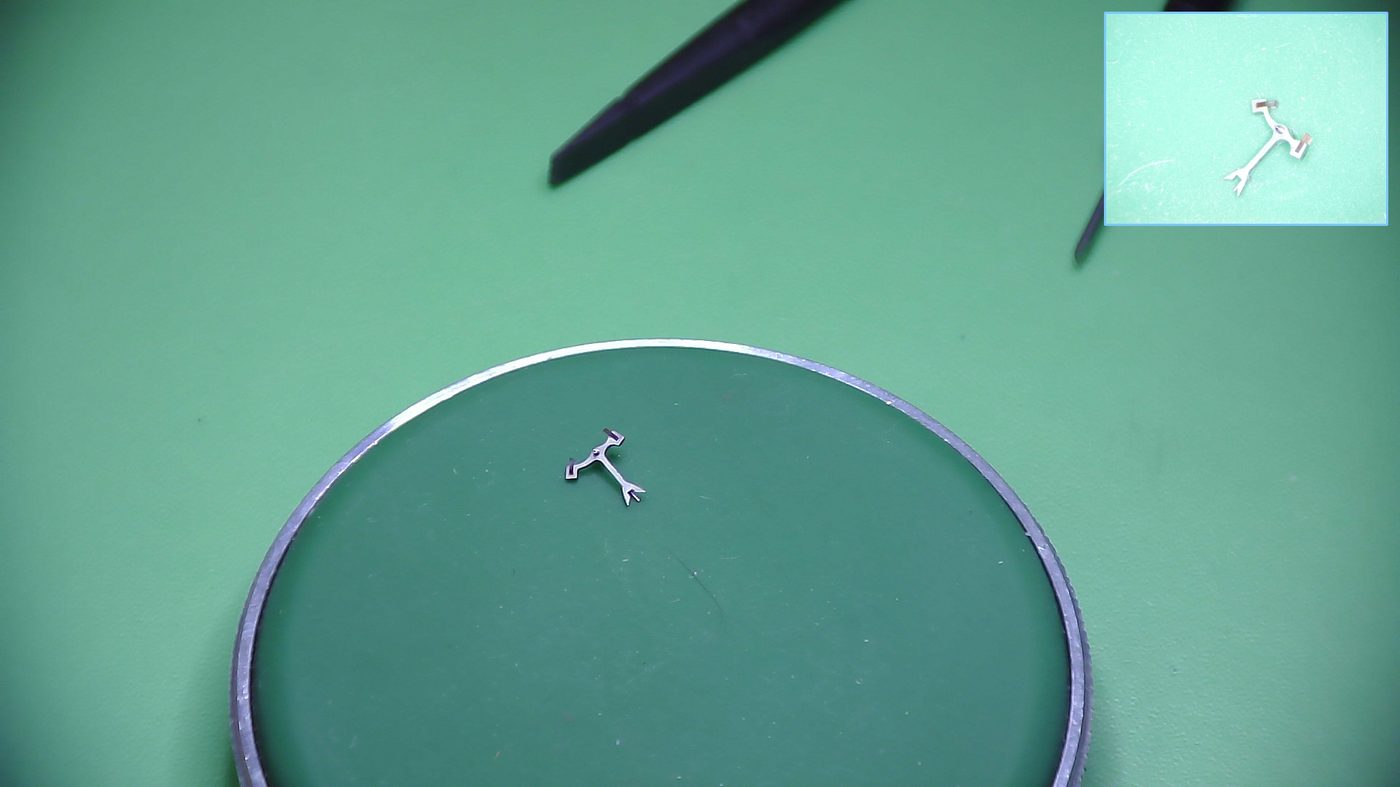
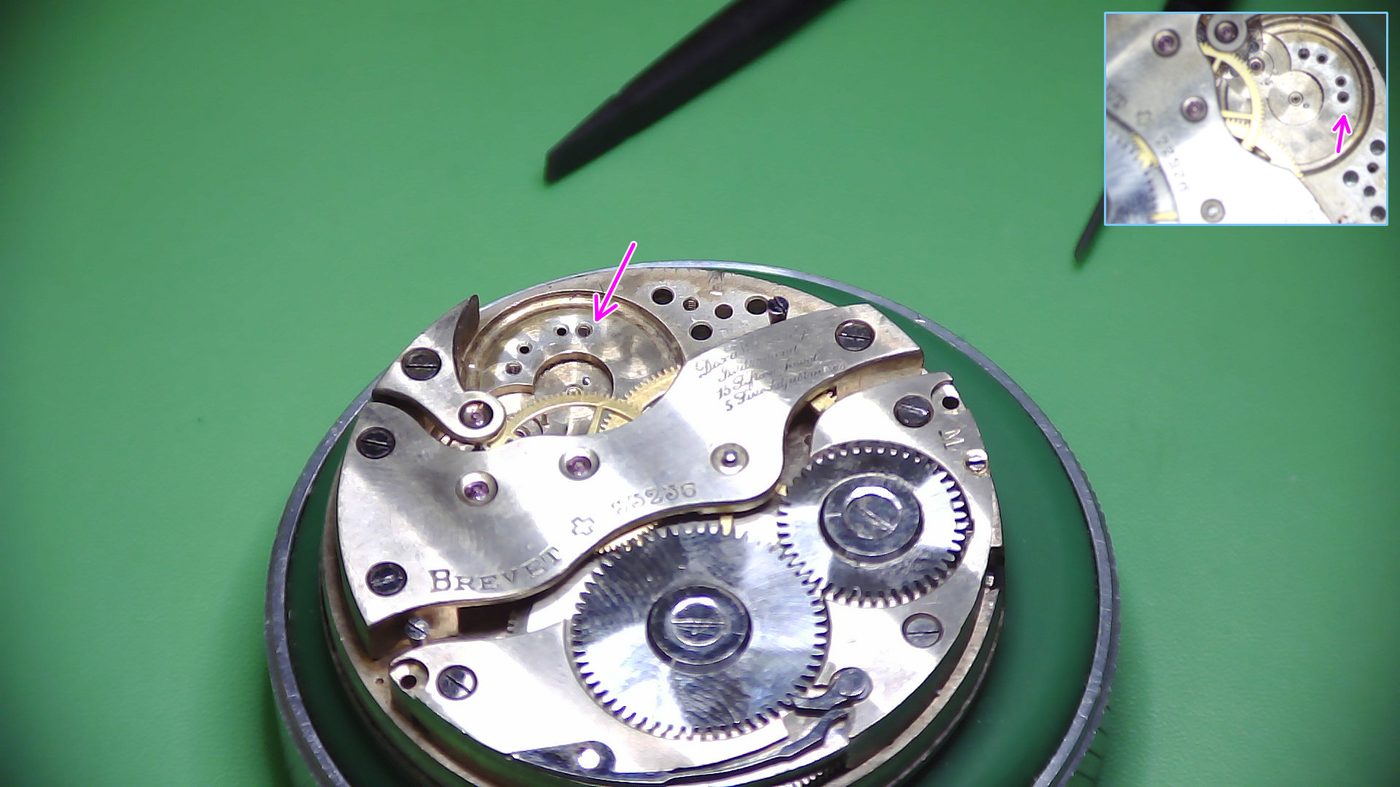
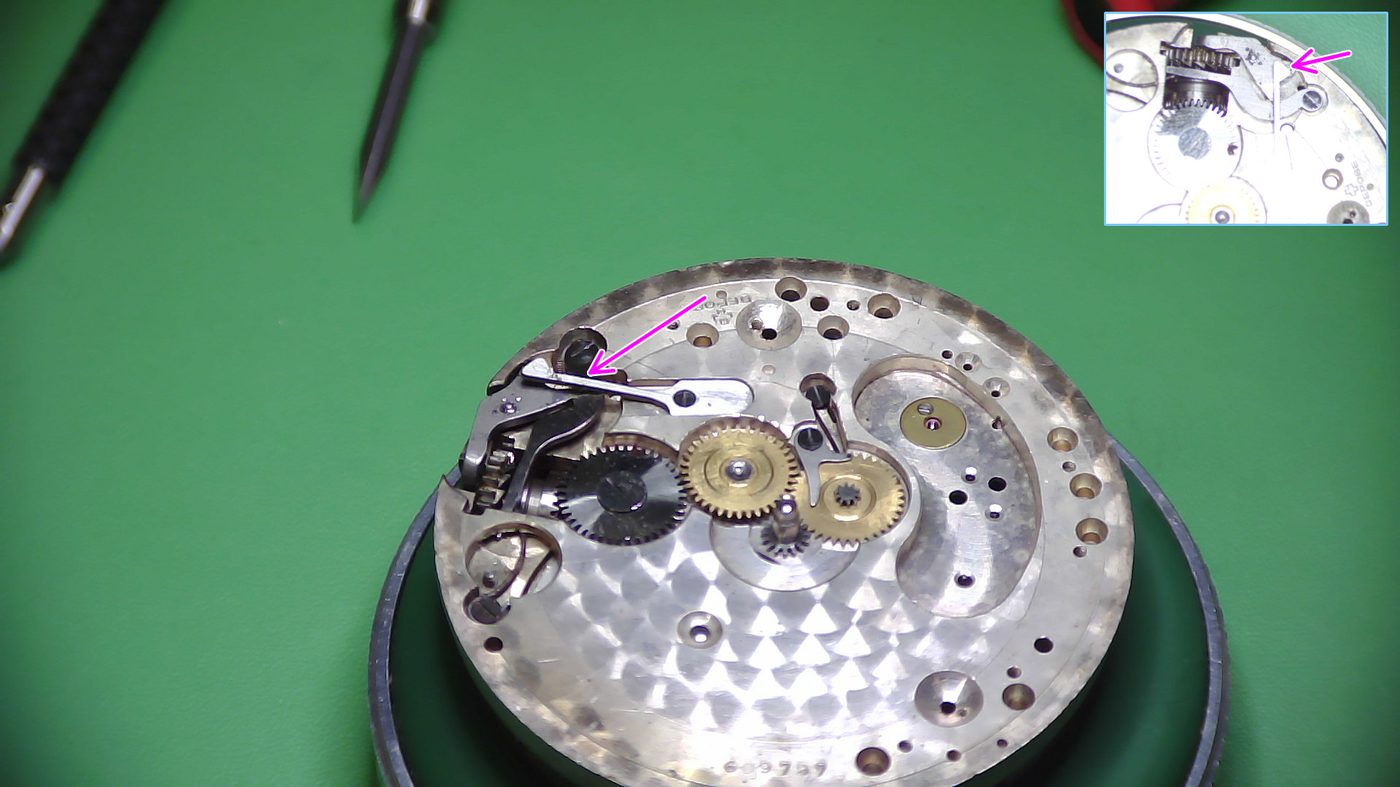
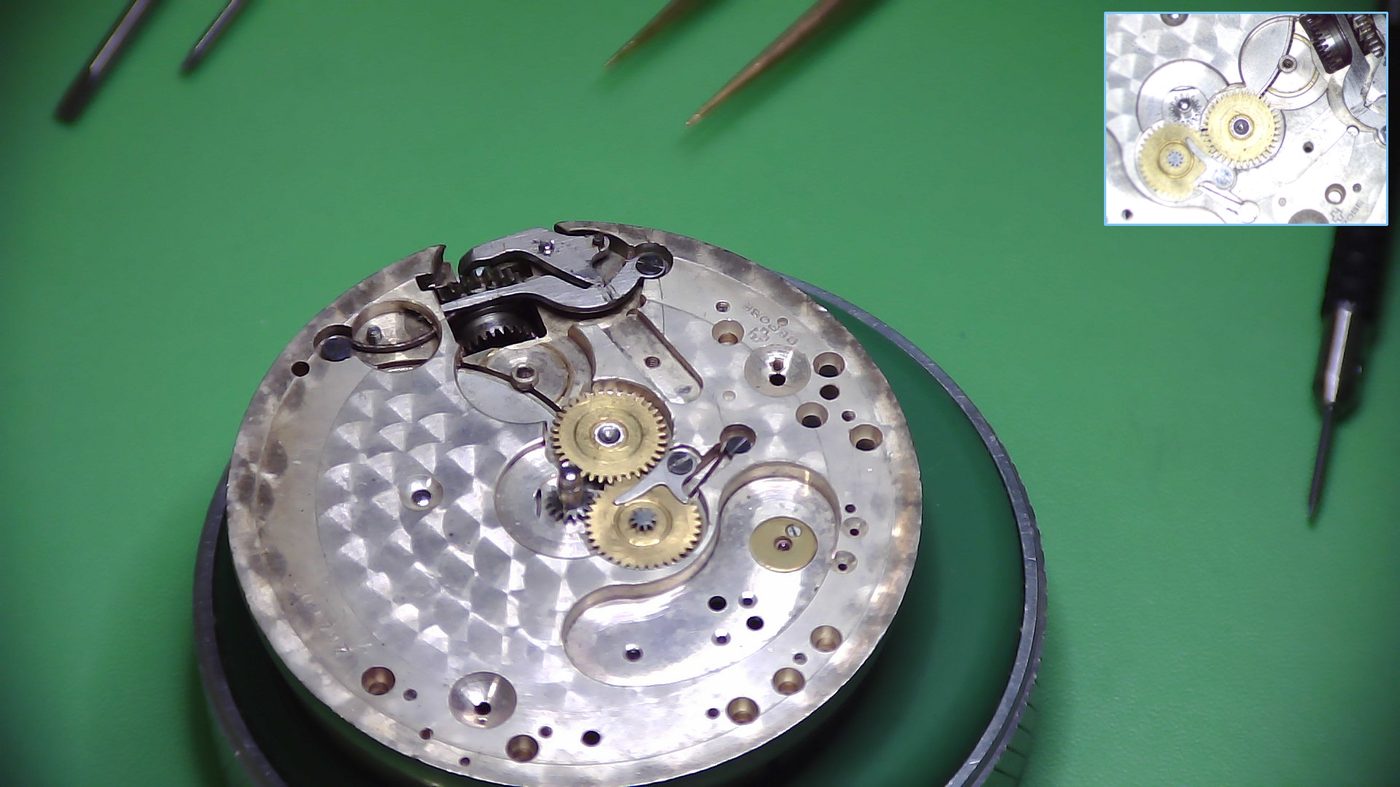
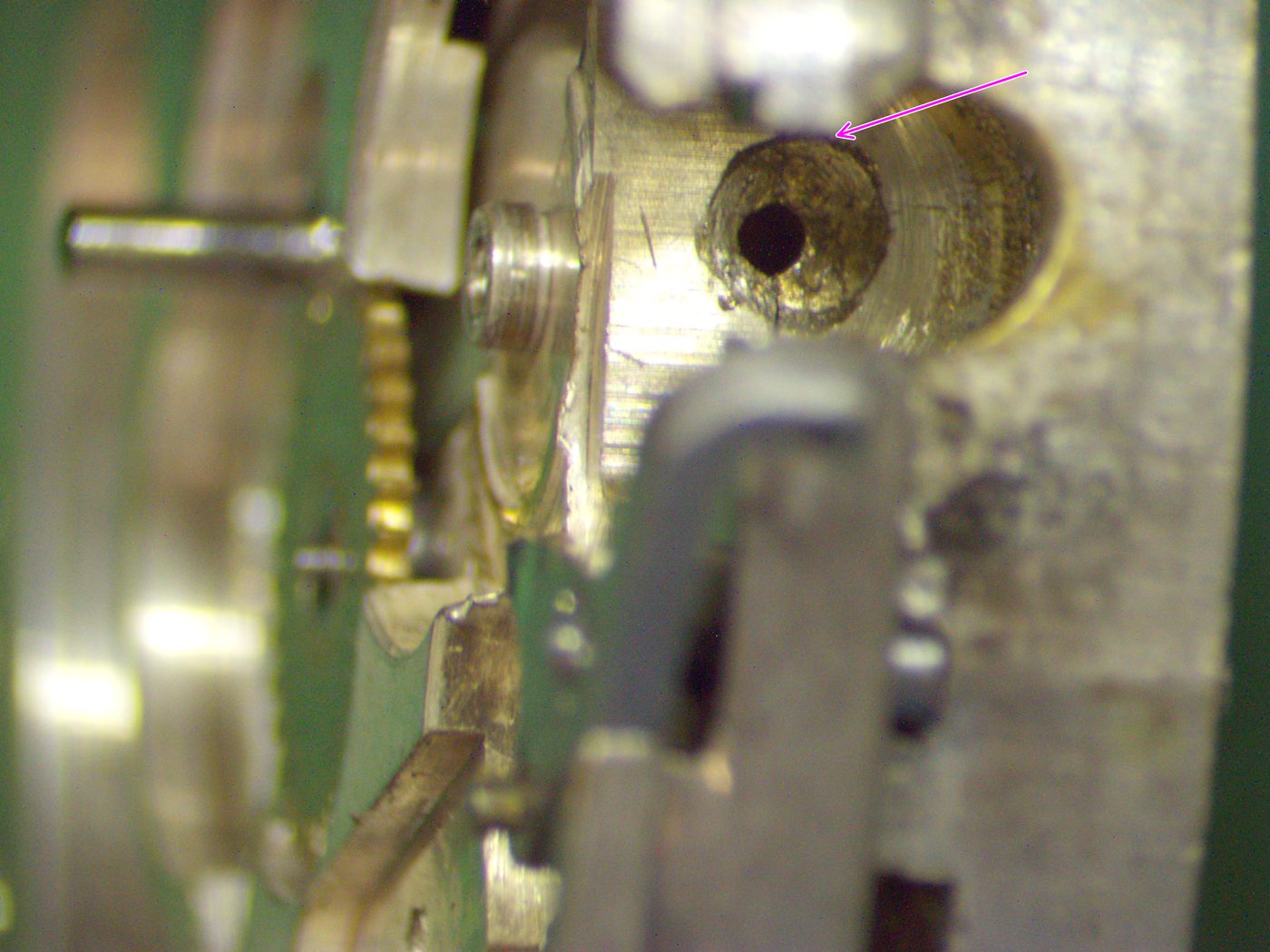
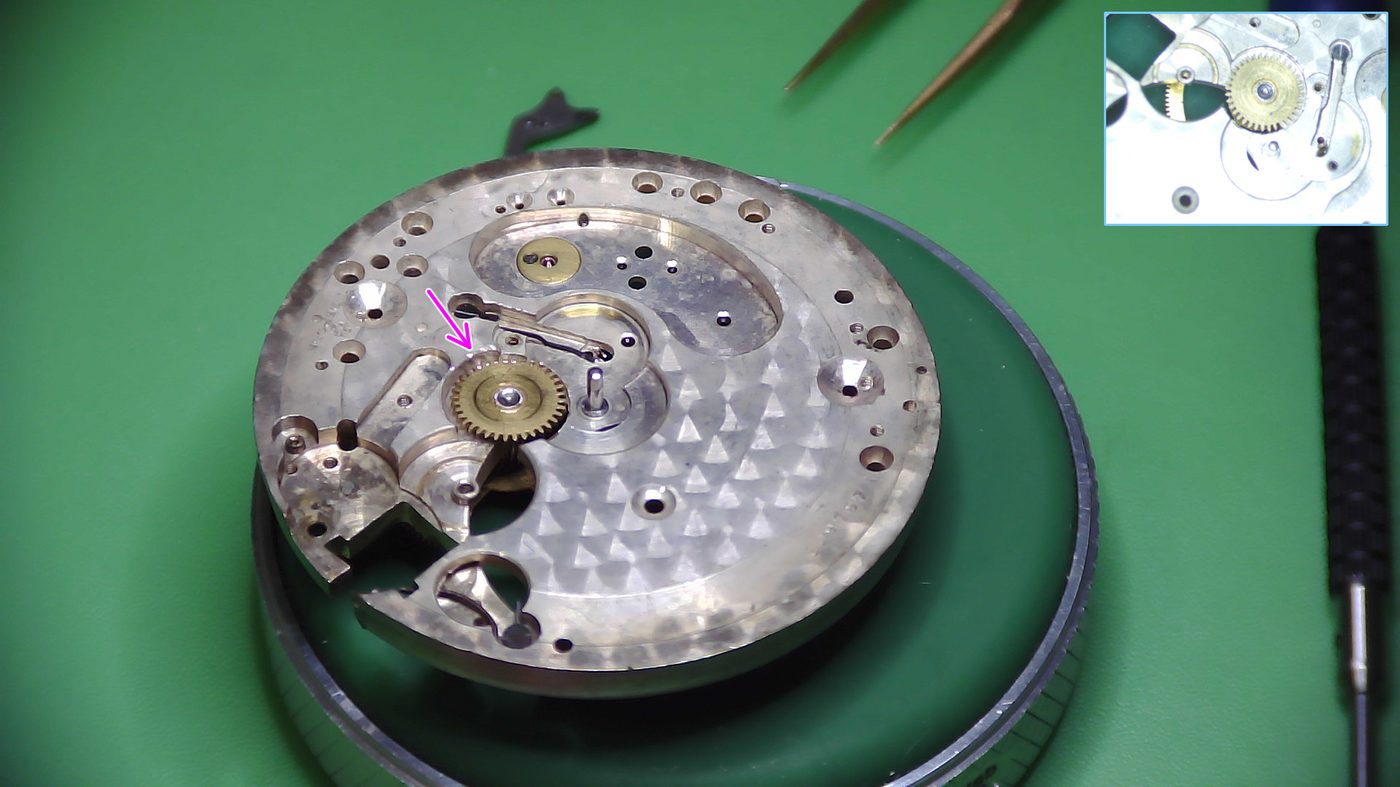
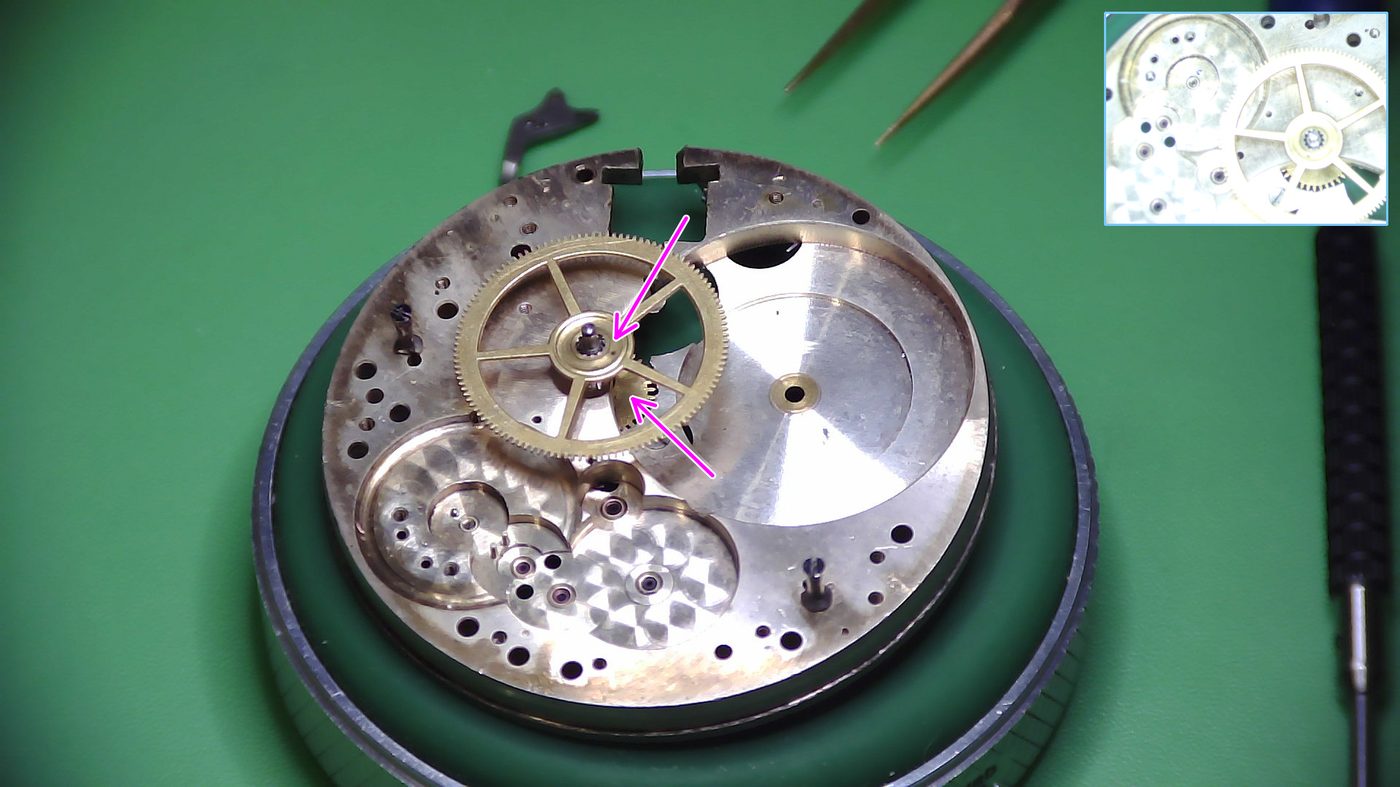
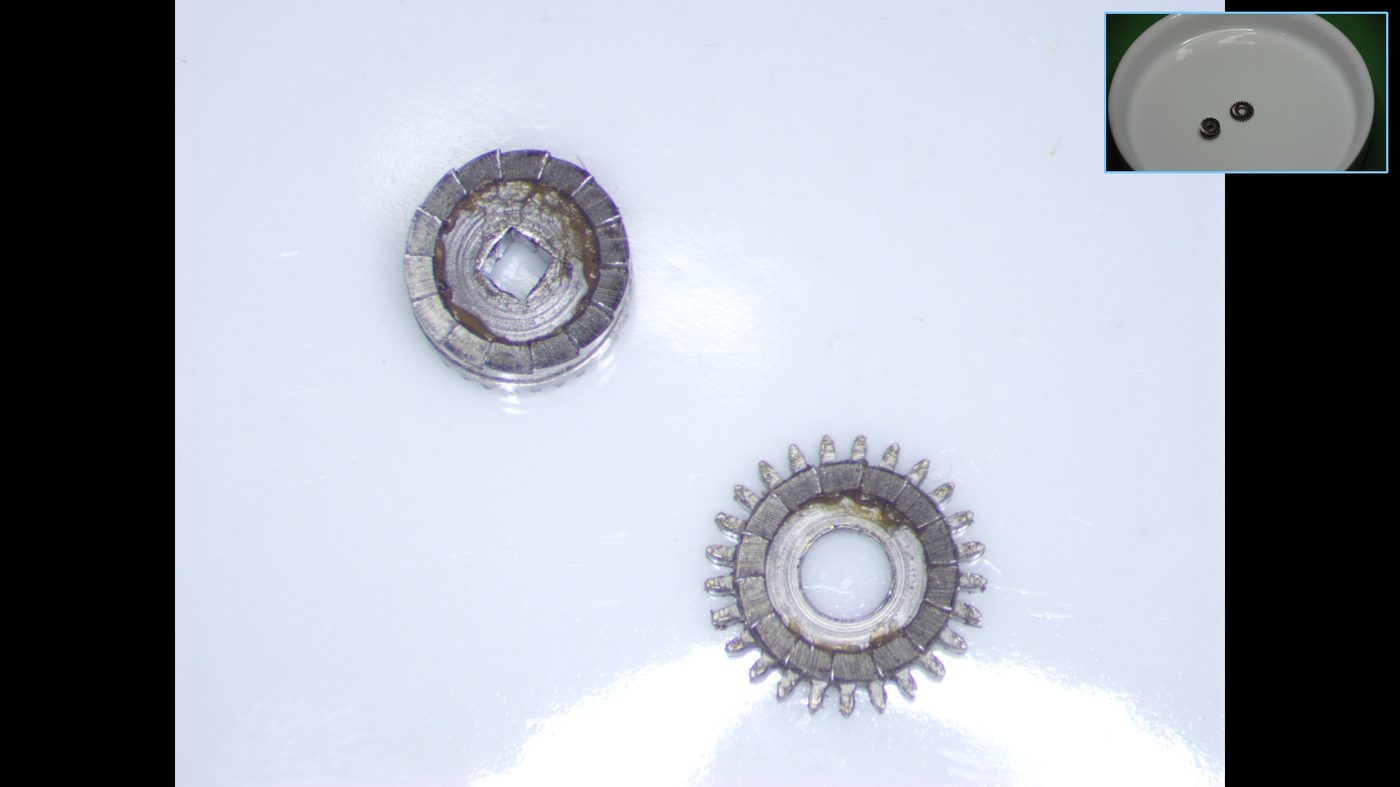
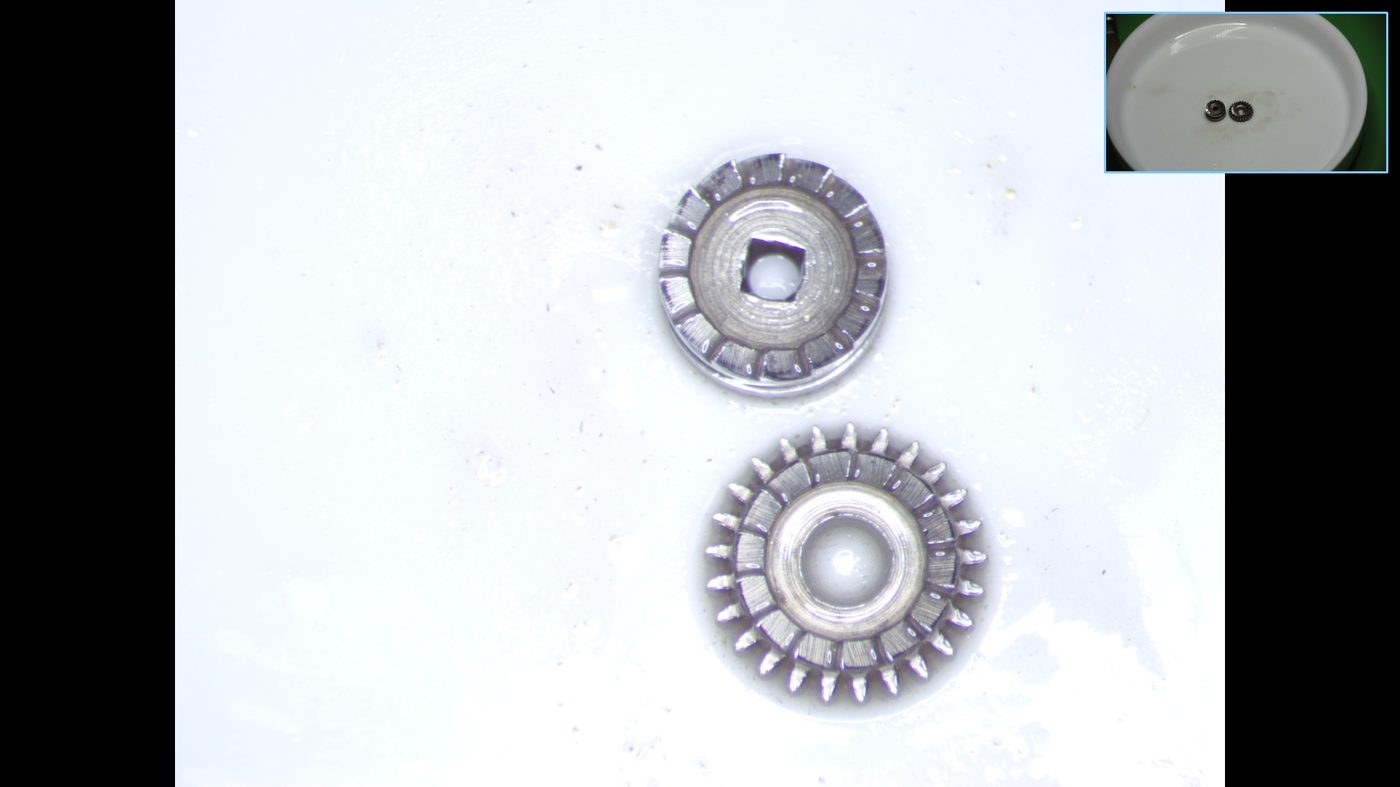
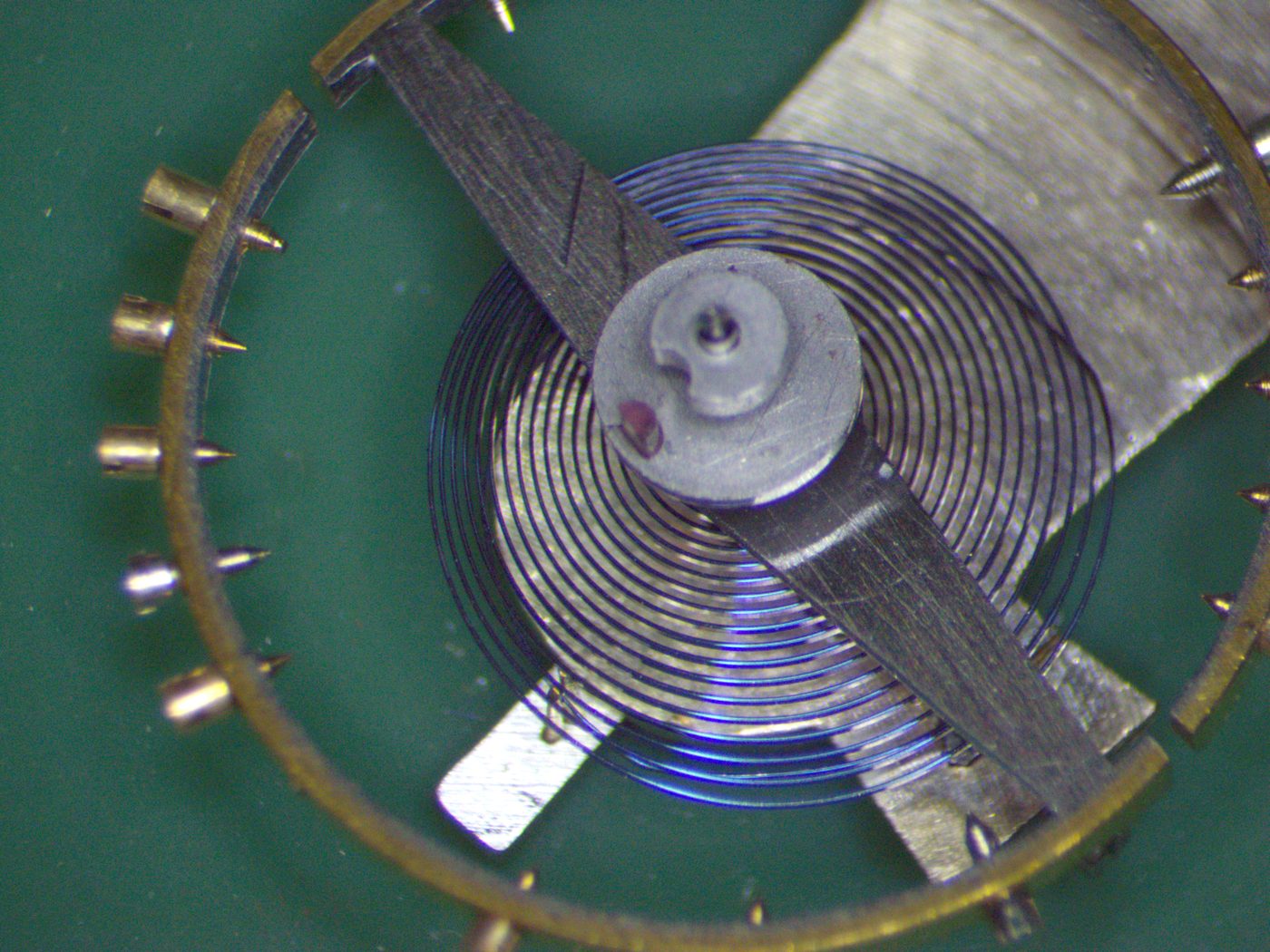
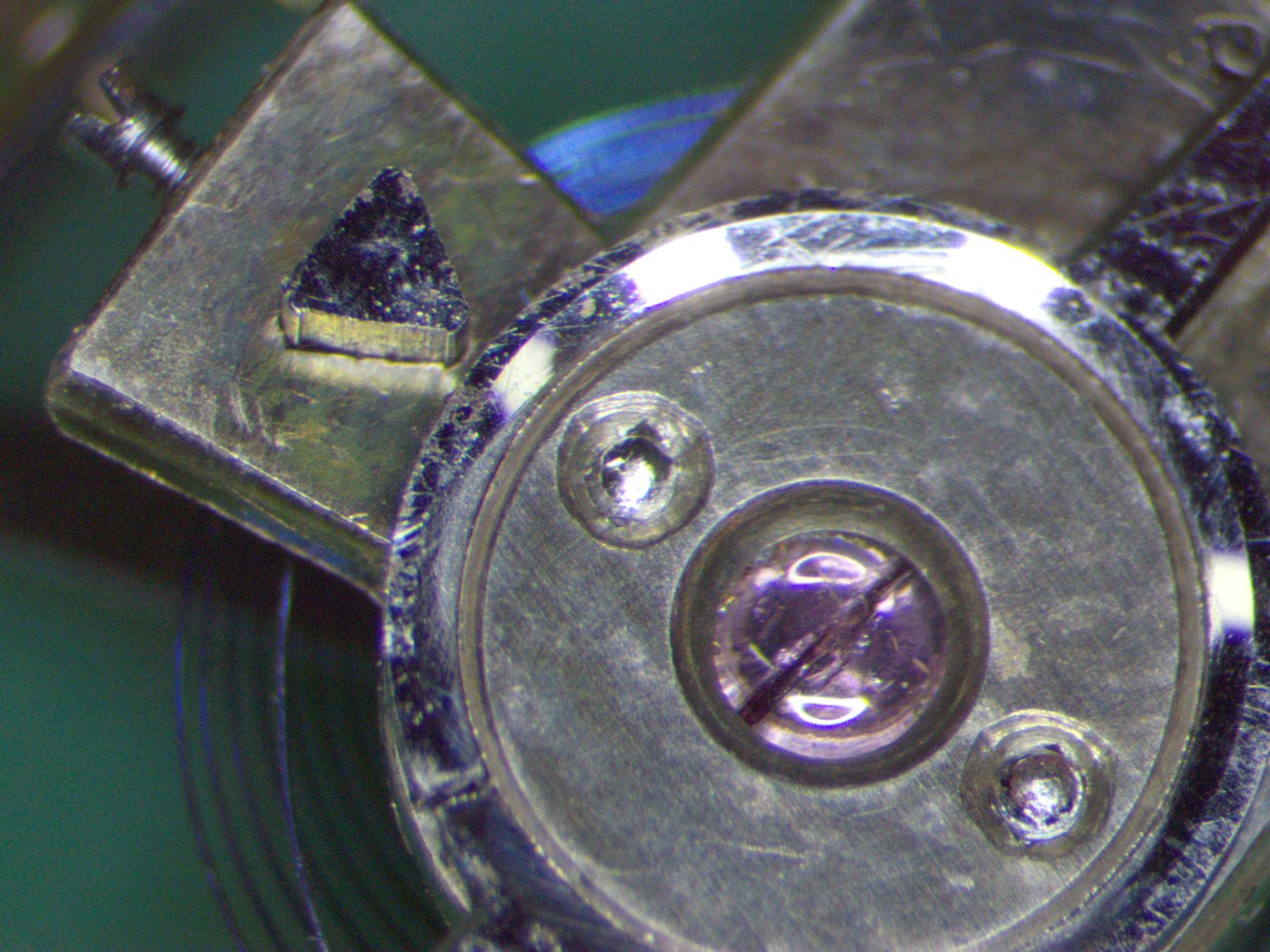
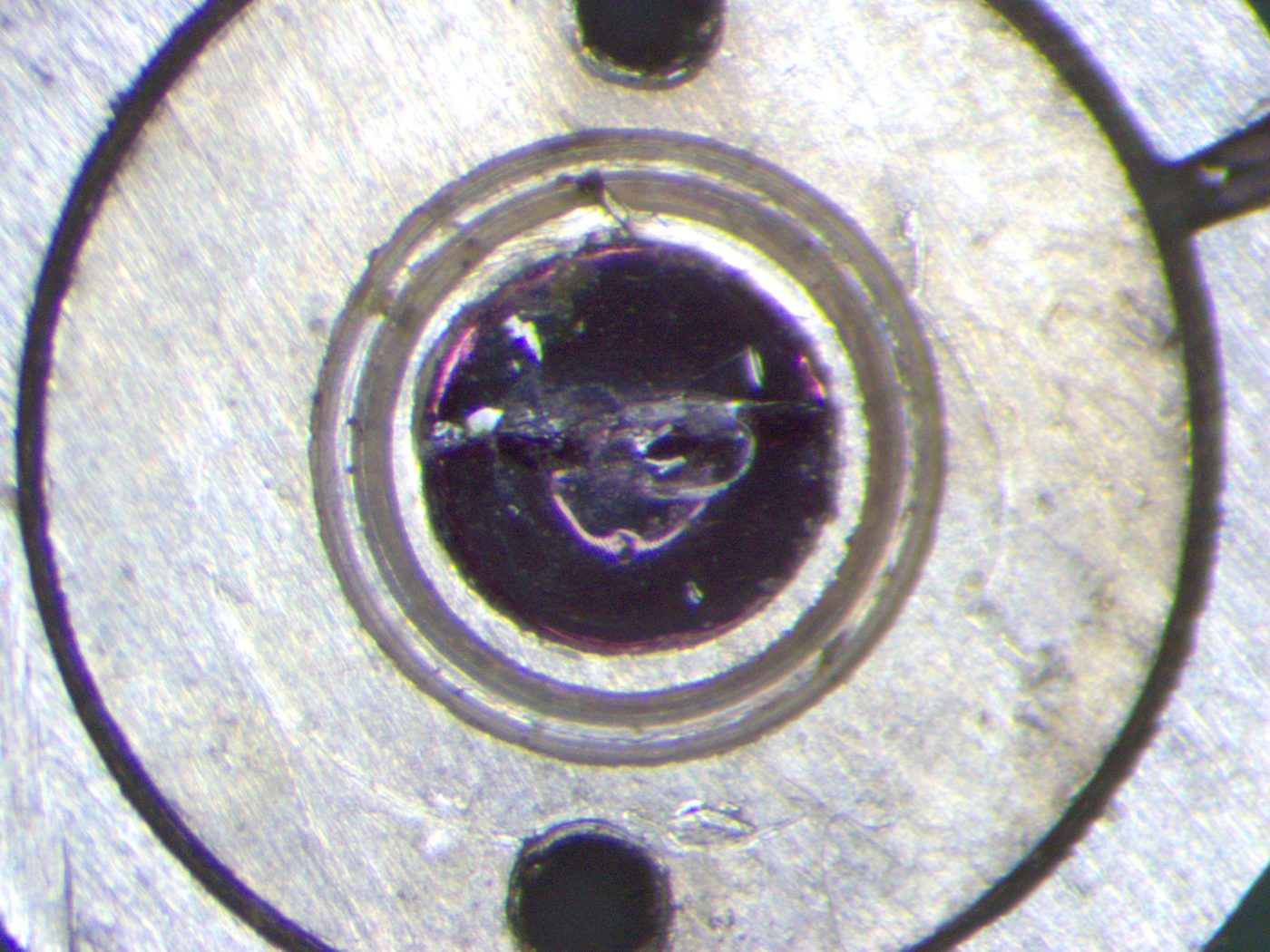
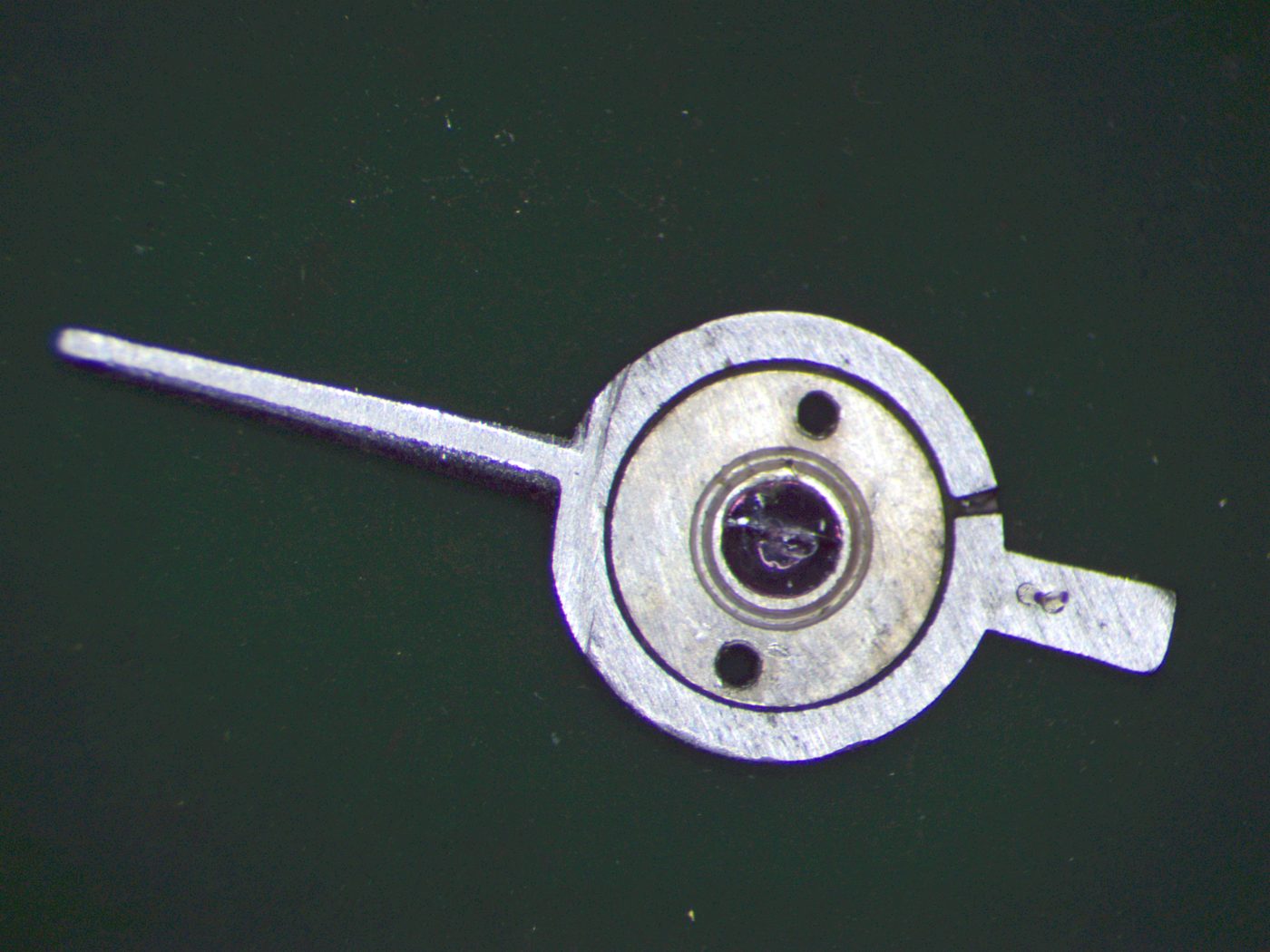
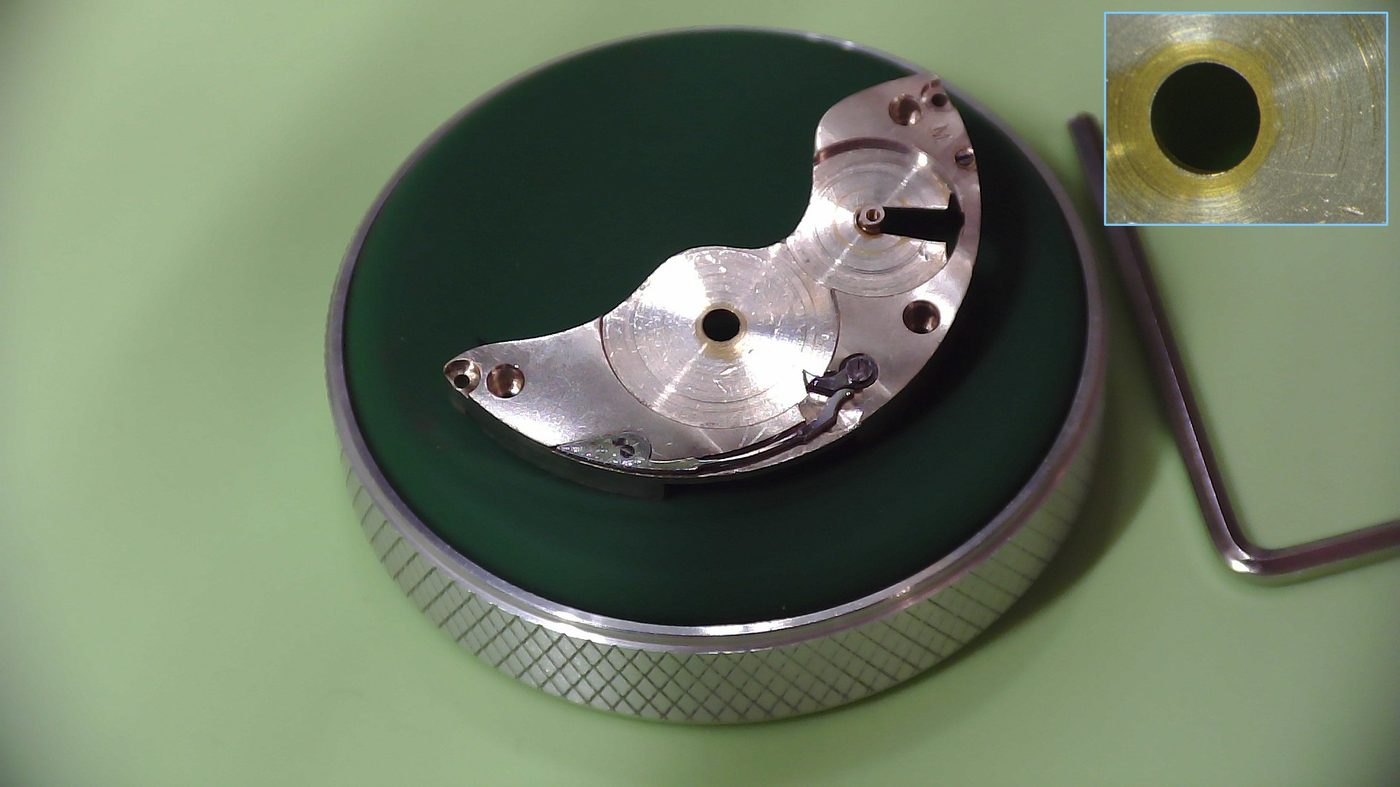
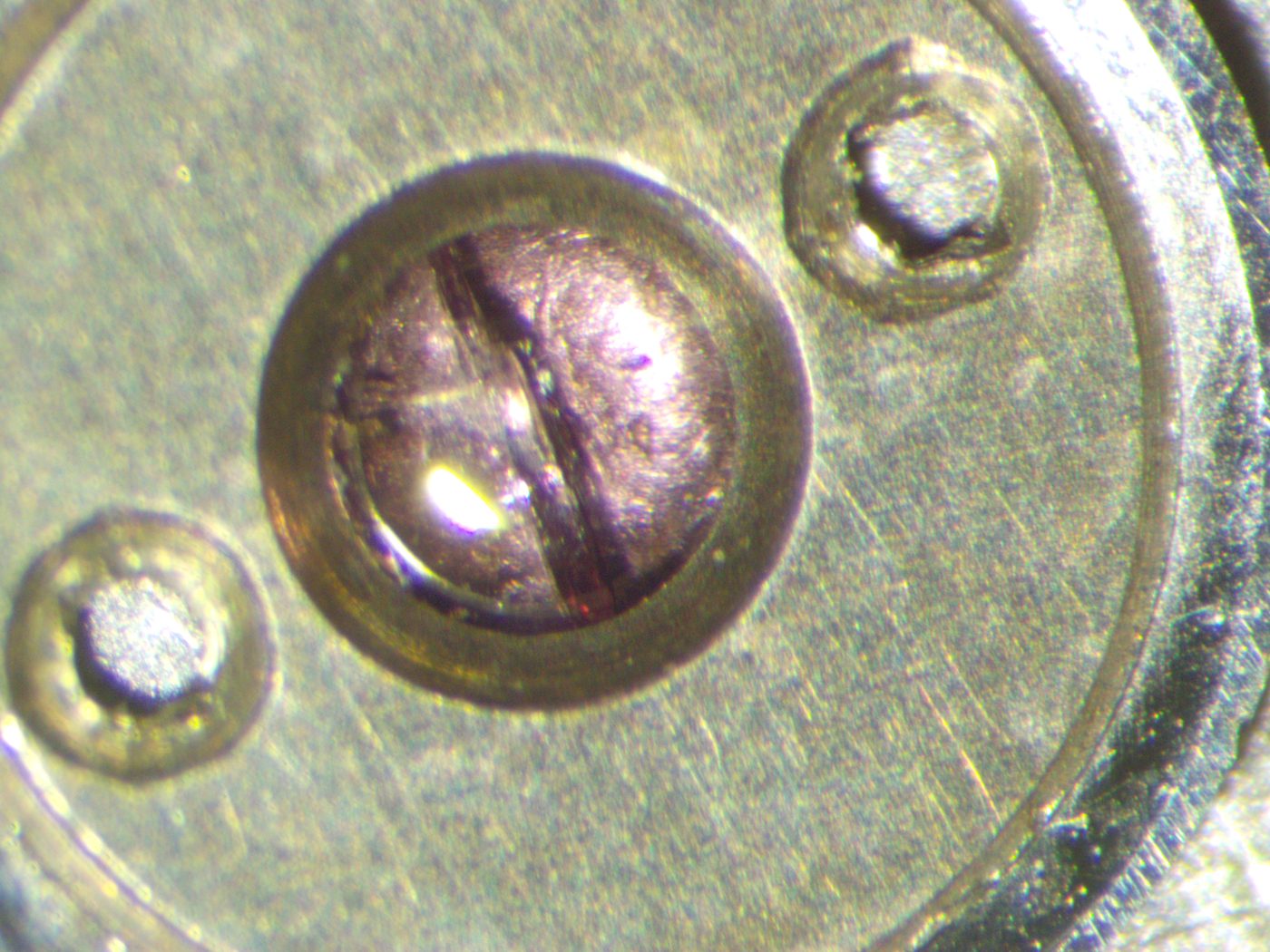
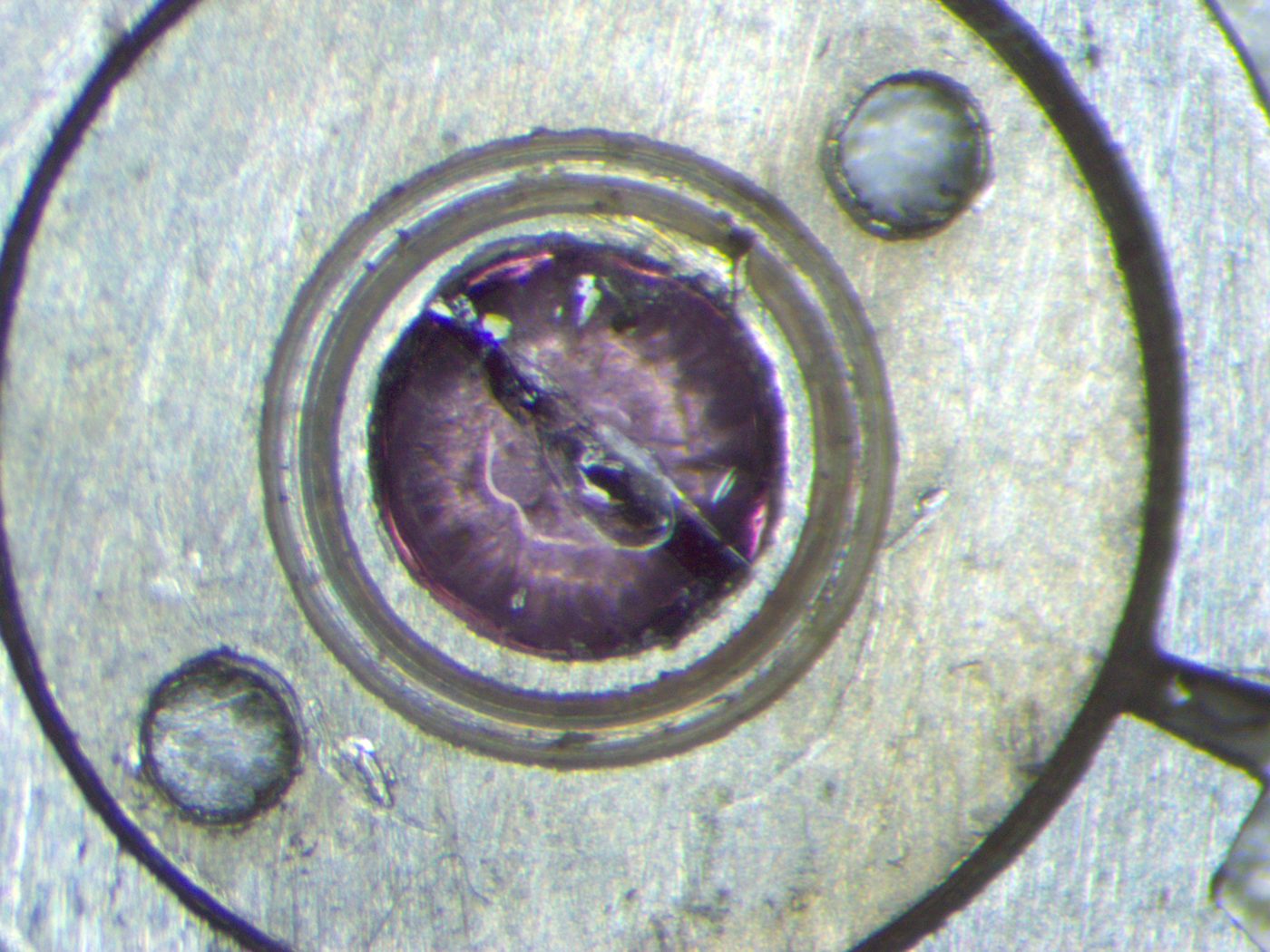
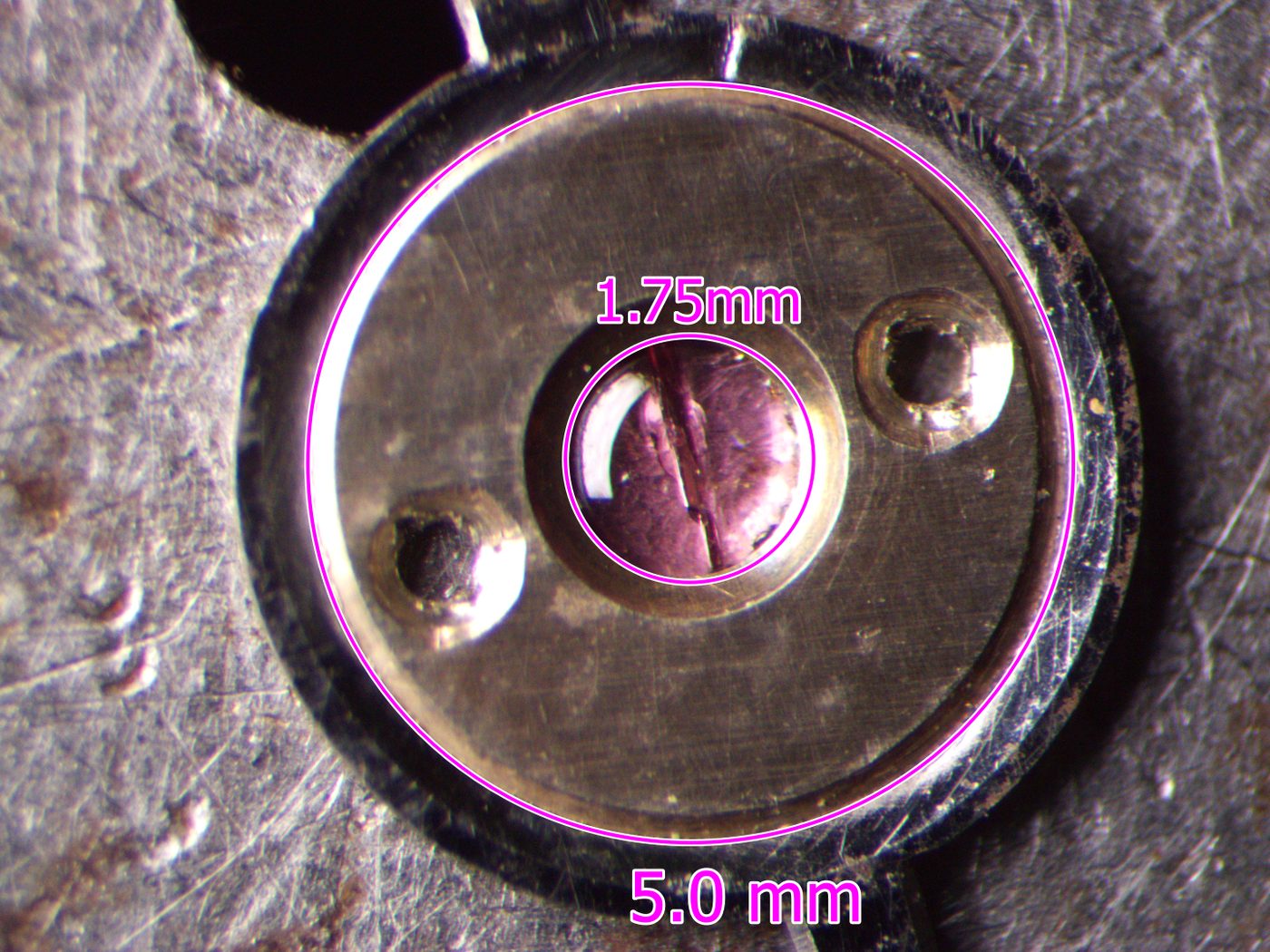
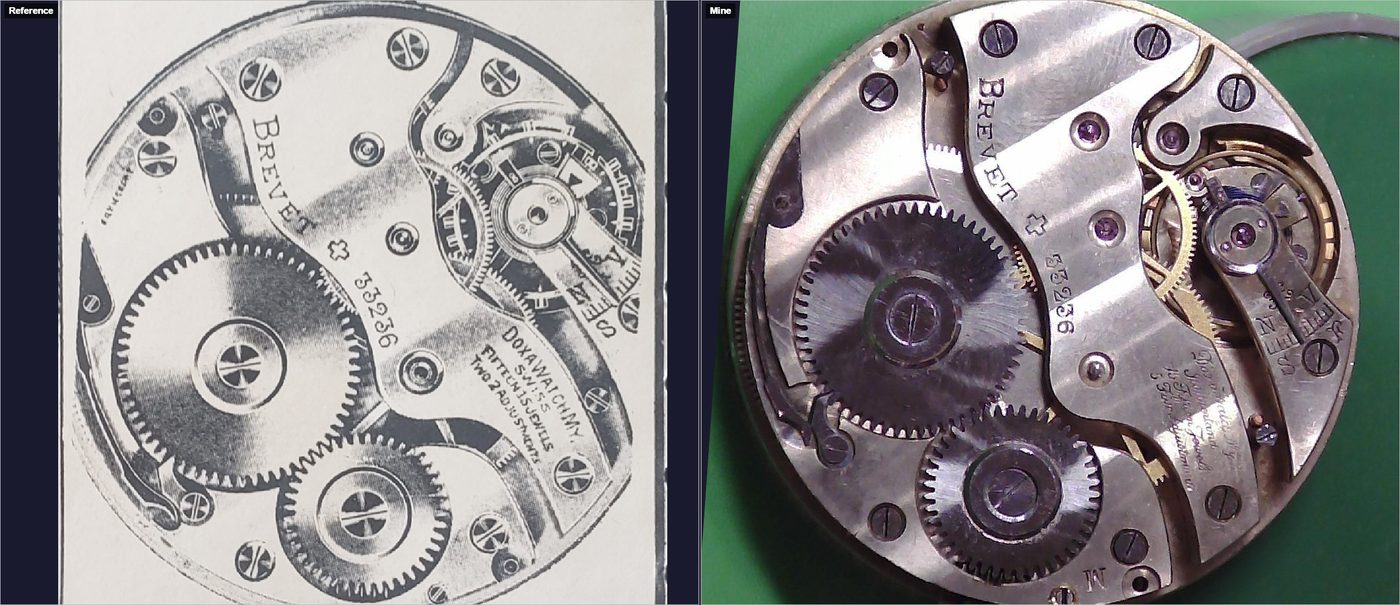
Knowing this is an 8D allowed me to put a watch on a donor movement on ebay.
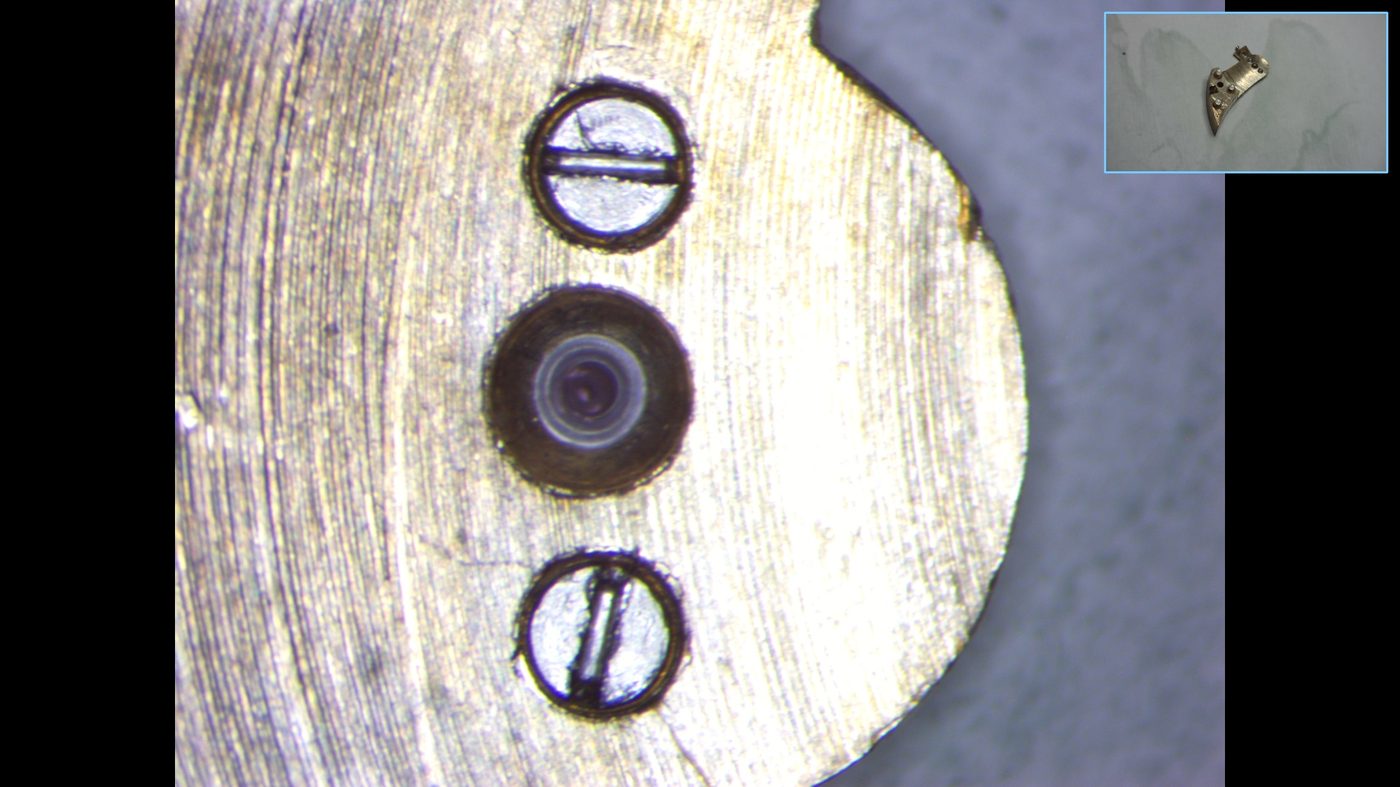
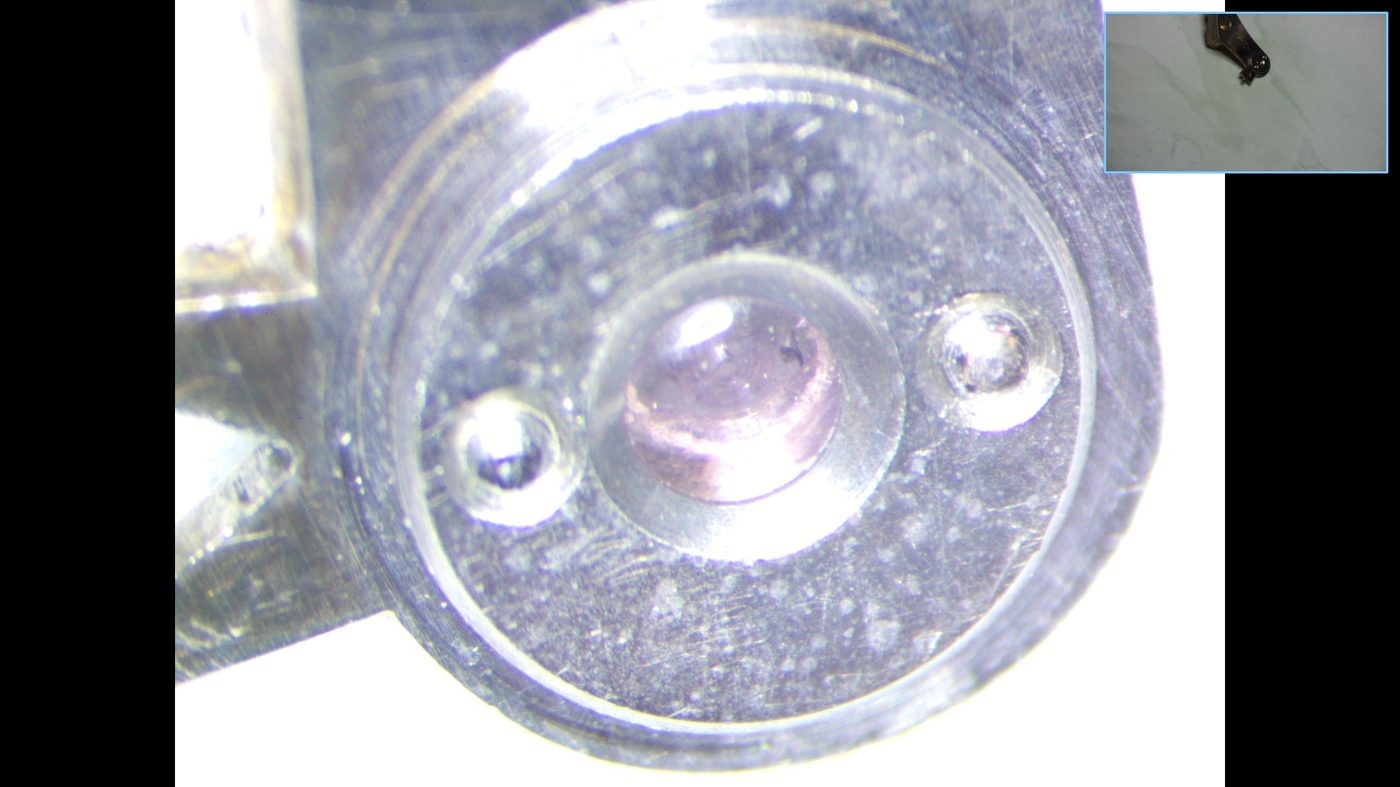
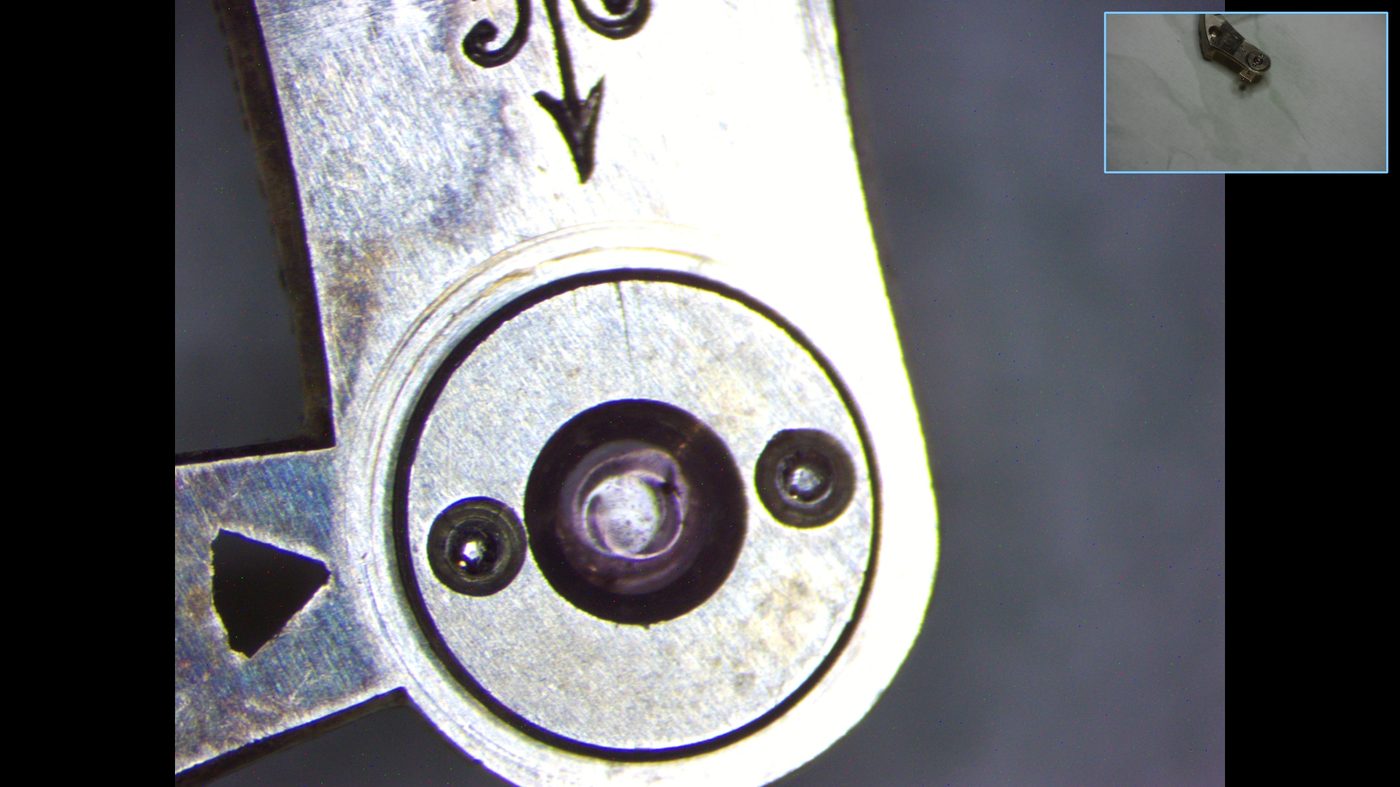
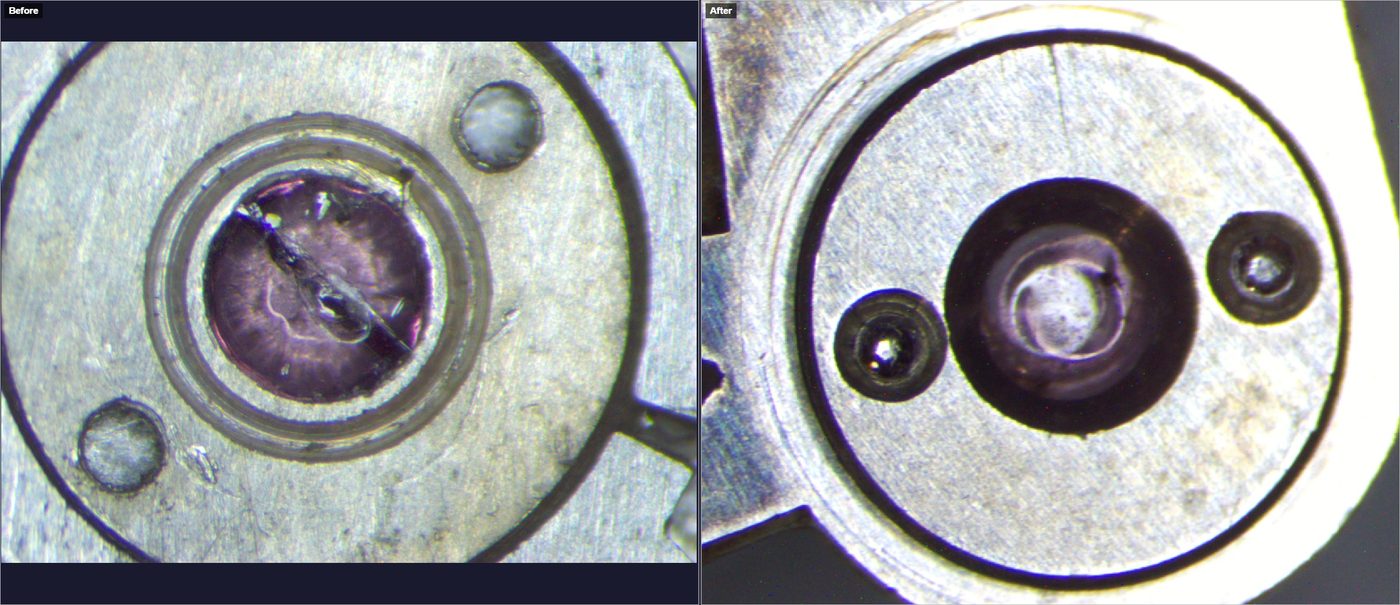
Fixing the broken jewel is kind of hard because I am not great a jeweling yet (firstly) but also it is an unusual size for a jewel.
The best advice I received was since this is a cap jewel, I could push the broken jewel out – then cut a brass bushing to OD size to press into the hole, then fit a smaller more common diameter cap jewel into the bushing. Since this is a cap jewel, the jewel only needs to be large enough to ensure the balance staff pivot will be covered by it and hold oil. The depthing is more simple as it's just level to the bottom face of the chaton since it is a cap jewel.
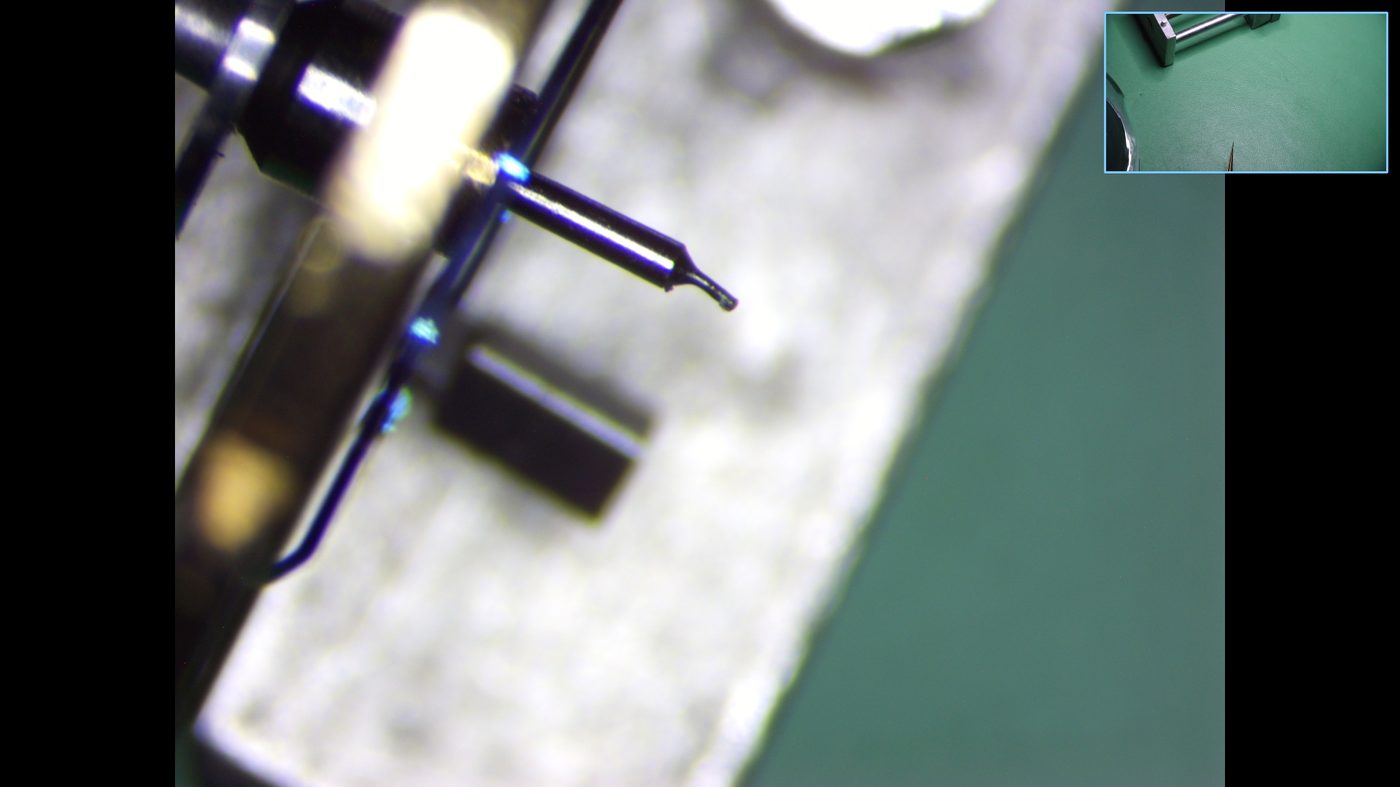
Next, I think I’ll wash or re-wash the parts.
I honestly can’t recall if I put this through the ultrasonic, so I’m going to do it again.
Then I’ll be able to assemble, lubricate and test it.
I am hoping the other main issue with the keyless was due to the parts being pushed out of place by some trauma and that during assembly I can get them all back in place correctly and working well.
Published with Bench Buddy.